Bunny Teeth in Humans: Causes, Treatment & How to Fix Them
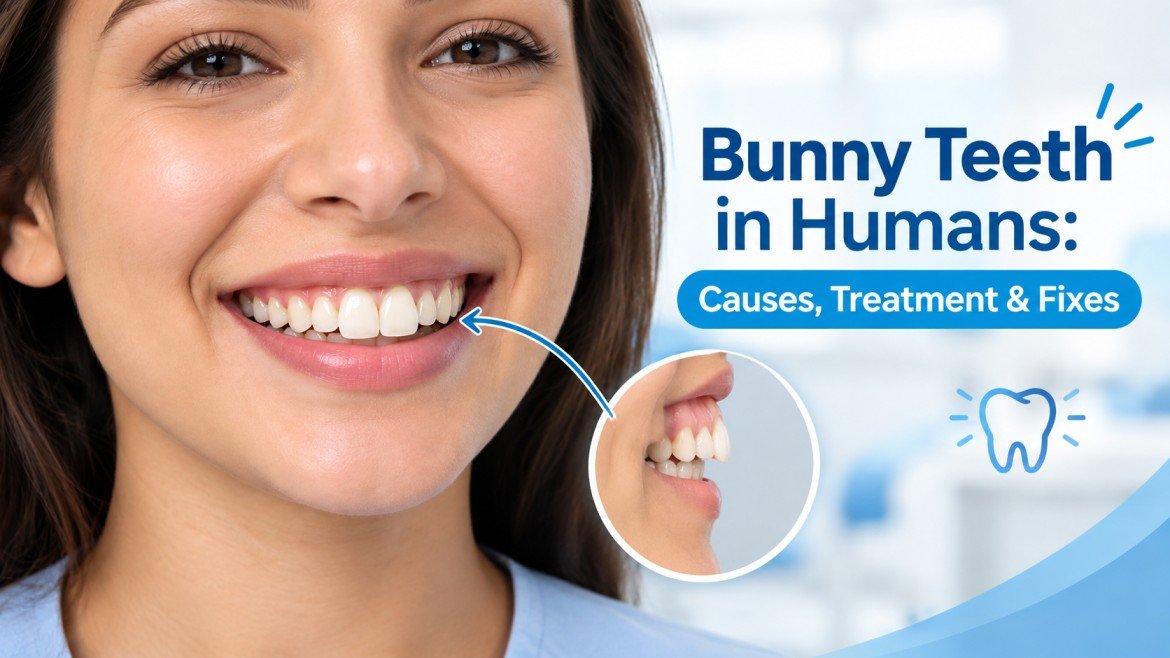
If your two upper front teeth look larger, longer, or sit farther forward than the teeth around them, you may have what people commonly call bunny teeth. The term is informal, but it is widely used to describe prominent upper front teeth.
Depending on the reason behind their appearance, bunny teeth may simply be a natural feature of your smile, or they may be related to a dental alignment problem such as an increased overjet.
The good news is that prominent or protruding front teeth can often be managed with modern dental and orthodontic treatments. The right approach depends on whether the teeth are actually protruding, simply appear large, or are affected by the position of the jaw.
What Are Bunny Teeth?
“Bunny teeth” is a casual term for noticeably prominent upper front teeth, particularly the two upper central incisors.
Some people have bunny teeth because their front teeth are naturally larger or longer than the neighboring teeth. In other cases, the teeth actually project forward relative to the lower teeth.
When the upper front teeth extend horizontally farther forward than normal, dentists generally describe the relationship as overjet. This is different from an overbite, which describes how much the upper teeth vertically overlap the lower teeth.
Bunny teeth, buck teeth, protruding teeth and prominent front teeth are often used interchangeably in everyday conversations, although a dentist will use more specific terminology after examining the bite.
Are Bunny Teeth Normal?
Yes. Having prominent front teeth does not automatically mean that something is wrong.
The upper central incisors are naturally among the most noticeable teeth in the mouth. Their size, shape and position can vary from person to person.
If your teeth are healthy, your bite works comfortably and you have no difficulty cleaning them, bunny teeth may simply be part of your natural smile.
Treatment becomes more relevant when the teeth are significantly protruding, difficult to clean, frequently injured, affecting your bite, or causing a cosmetic concern that you personally want to address.
Bunny Teeth vs. Buck Teeth: Are They the Same?
In everyday dental discussions, bunny teeth and buck teeth are often used to describe similar-looking prominent upper front teeth.
However, appearance alone does not tell you exactly what is causing the issue.
For example, front teeth may look like bunny teeth because:
- The teeth are naturally large.
- The teeth are longer than neighboring teeth.
- The upper incisors are angled forward.
- The upper dental arch is narrow or crowded.
- The lower jaw sits farther back.
- There is an increased overjet.
- A childhood oral habit affected tooth position.
- Several of these factors occur together.
That is why a dental examination is more useful than trying to diagnose the cause from a photograph.
What Causes Bunny Teeth?
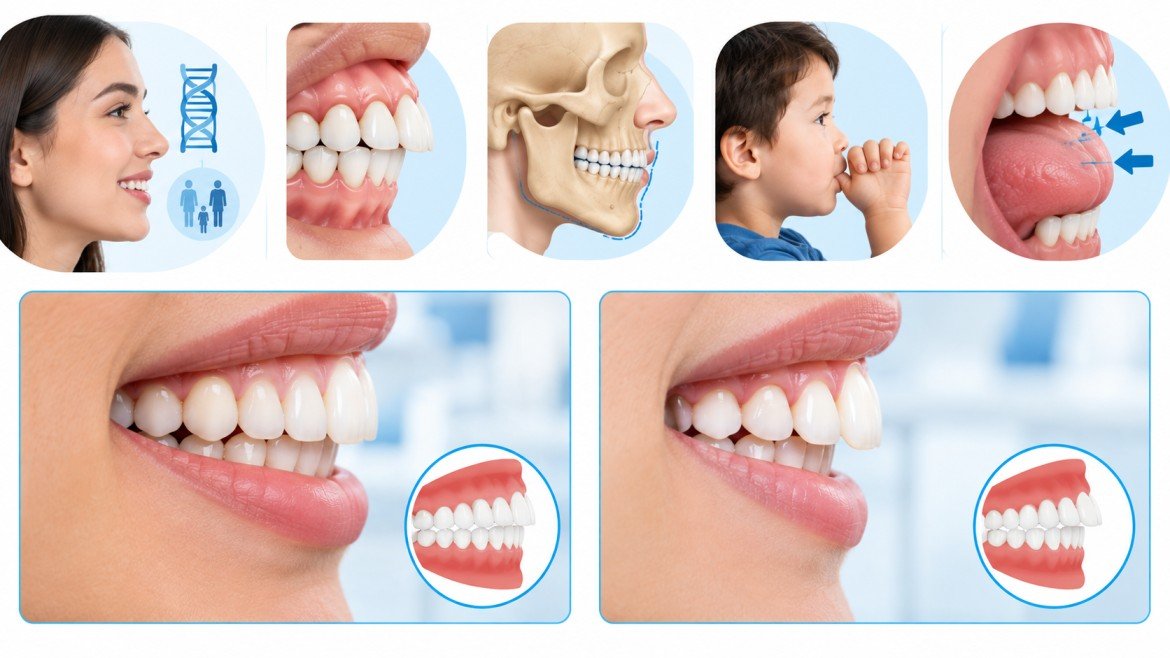
There is no single cause of prominent front teeth. Several factors can contribute.
Genetics
Genetics can influence the size and shape of your teeth, the width of your dental arches and the growth pattern of your upper and lower jaws.
If prominent teeth or a particular jaw relationship runs in your family, you may have inherited some of the characteristics associated with bunny teeth.
Jaw Growth and Alignment
Sometimes the teeth themselves are not unusually large. Instead, the relationship between the upper and lower jaws makes the upper front teeth appear more prominent.
For example, a lower jaw that is positioned farther back can make the upper front teeth look more pronounced.
In more significant cases, dentists and orthodontists may describe the bite as a Class II malocclusion.
Thumb Sucking
Long-term thumb or finger sucking during childhood can put pressure on developing front teeth.
When the habit continues beyond the early years, it can influence the position of the upper incisors and the development of the bite.
Pacifier Use
Extended pacifier use may also influence the developing dental arches and front teeth in some children.
The effect depends on factors such as duration, frequency and the child’s stage of dental development.
Tongue Thrusting
Tongue thrusting occurs when the tongue pushes against or between the front teeth during swallowing or at rest.
Persistent tongue pressure can contribute to changes in tooth position, particularly when other alignment factors are already present.
Tooth Size and Crowding
Sometimes the upper front teeth are relatively large compared with the available space in the dental arch.
Crowding can change the angle or position of the incisors, making them look more prominent.
What Is Overjet?
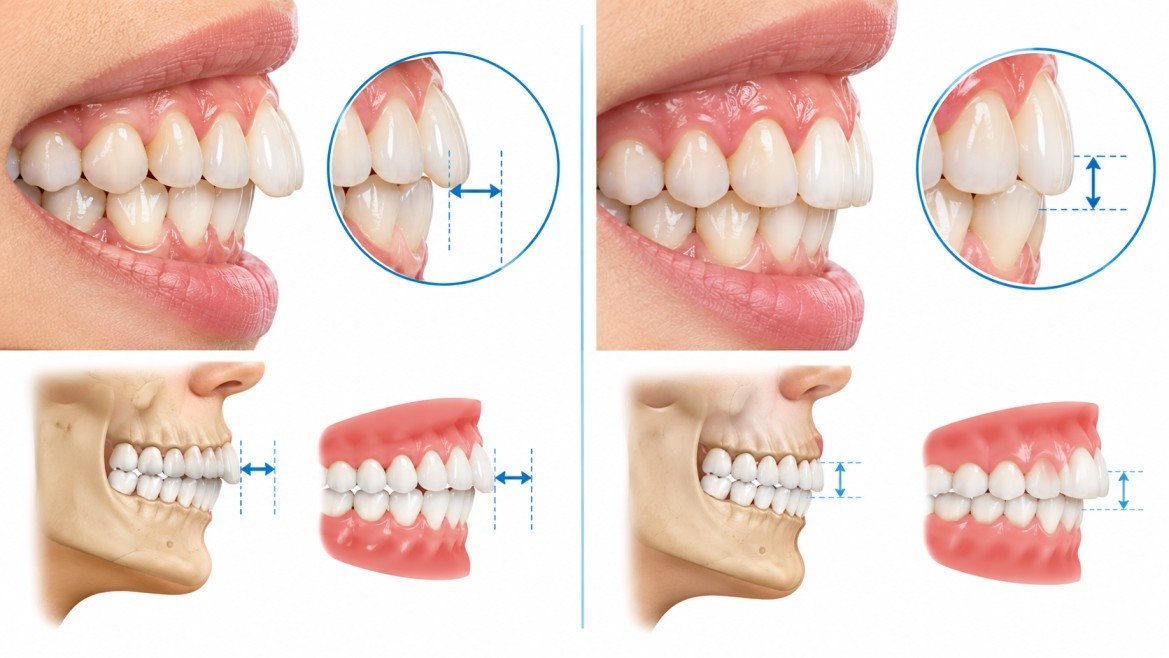
Overjet describes the horizontal distance between the upper and lower front teeth.
A small amount of horizontal separation between the upper and lower incisors is normal. When the upper front teeth extend significantly forward, it may be described as an increased overjet.
This is important because people sometimes use the word “overbite” when they actually mean overjet.
An overbite concerns vertical overlap, while overjet concerns forward horizontal projection.
Both can occur at the same time, but they are not identical conditions.
Can Bunny Teeth Be Fixed?
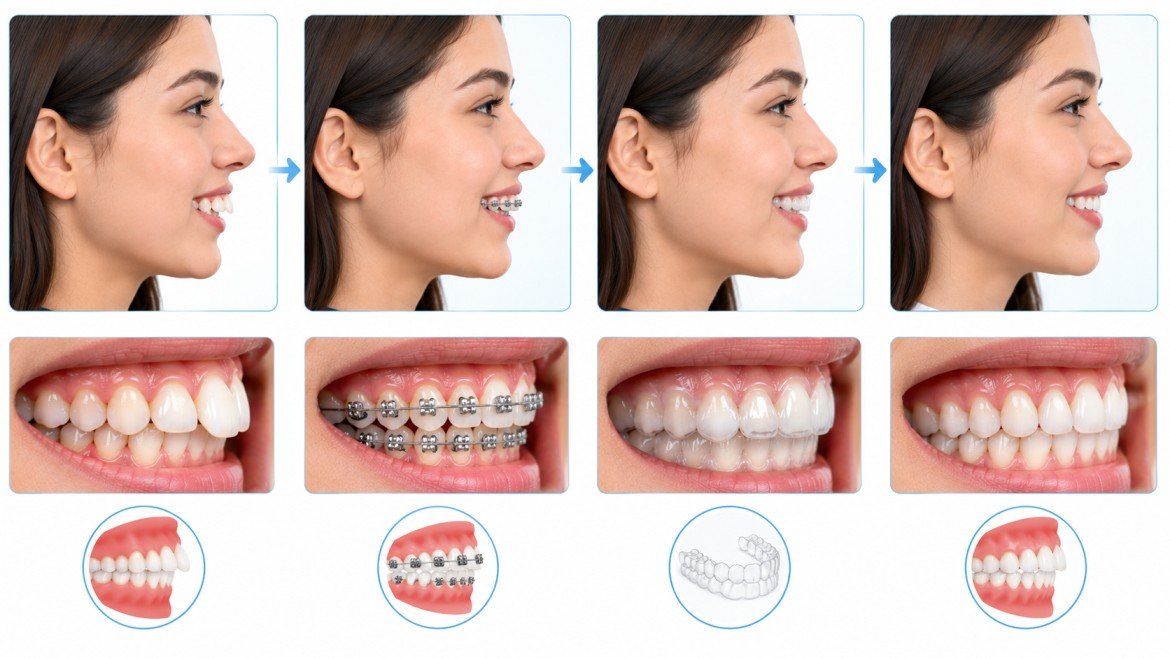
In many cases, yes.
The appropriate treatment depends on whether the problem involves tooth position, tooth shape, jaw development or a combination of factors.
Common options include:
- Braces
- Clear aligners
- Orthodontic appliances
- Dental bonding
- Enamel reshaping
- Veneers
- Jaw surgery for selected severe skeletal cases
Not every person with bunny teeth needs treatment. A dentist or orthodontist can determine whether the concern is primarily cosmetic or whether there is also a functional bite problem.
Braces for Bunny Teeth
Traditional braces are one of the established ways to correct protruding or misaligned front teeth.
Brackets and wires apply controlled forces to gradually move teeth into a better position.
Braces may be particularly useful when bunny teeth are associated with:
- Increased overjet
- Crowding
- Rotated teeth
- Bite problems
- Significant tooth movement requirements
Treatment length varies considerably. Mild alignment problems may require less time than complicated cases involving the bite or jaw relationship.
Your orthodontist can estimate the treatment period after examining your teeth and taking appropriate records.
Clear Aligners for Bunny Teeth
Clear aligners are another option for selected patients.
They use a series of removable trays designed to move teeth gradually. Whether aligners can correct your bunny teeth depends on the severity and underlying cause.
They may be suitable for some cases of tooth protrusion and mild-to-moderate alignment problems, while more complicated bite or skeletal problems may require other orthodontic approaches.
An orthodontist should determine whether clear aligners are appropriate rather than choosing them solely because they are less noticeable than braces.
Can Invisalign Fix Bunny Teeth?
Invisalign and other clear-aligner systems may correct certain cases of protruding front teeth.
However, there is no single treatment that works for every person with bunny teeth.
If the problem is mainly the position of the teeth, aligners may be an option. If the appearance is caused by a significant jaw discrepancy, additional orthodontic treatment or other procedures may be required.
A proper examination is therefore important before deciding on Invisalign or another clear-aligner system.
Dental Bonding for Bunny Teeth
Dental bonding may help when the main issue is the shape or appearance of the front teeth rather than their actual position.
During bonding, a dentist applies tooth-colored composite material and shapes it to improve the appearance of the tooth.
Bonding may be considered for relatively minor cosmetic concerns, such as:
- Uneven edges
- Small chips
- Minor shape differences
- Teeth that appear disproportionate
Bonding does not physically move a protruding tooth backward. If the tooth is genuinely positioned too far forward, orthodontic treatment may be more appropriate.
Enamel Reshaping
Enameloplasty, sometimes called enamel reshaping or tooth contouring, involves carefully removing a very small amount of enamel to modify the shape or length of a tooth.
This may be considered when front teeth appear too long or have minor irregularities.
It is important not to attempt tooth filing at home. Using a nail file, abrasive tool or other object on your teeth can permanently damage enamel and potentially cause sensitivity or other dental problems.
Only a qualified dental professional should determine whether enamel reshaping is safe.
Can Veneers Fix Bunny Teeth?
Veneers can change the visible shape, size and color of front teeth.
They may be considered when the concern is primarily cosmetic, particularly when teeth are healthy but their proportions or appearance are bothersome.
However, veneers do not move teeth within the jaw.
If the upper front teeth genuinely protrude because of an alignment or bite problem, orthodontic treatment may be needed instead of—or before—cosmetic treatment.
Do Bunny Teeth Need Treatment?
Not necessarily.
Treatment may not be required if your teeth are healthy, your bite functions normally and you are comfortable with your appearance.
A dental evaluation becomes especially useful if you experience:
- Difficulty biting or chewing
- Frequent lip biting
- Difficulty cleaning around the teeth
- Tooth wear
- Jaw discomfort
- Speech concerns
- Repeated injury to prominent front teeth
- Significant crowding
- A noticeable bite problem
The decision to correct mild bunny teeth for cosmetic reasons is also personal.
What Happens If Protruding Teeth Are Left Untreated?
Mildly prominent teeth may not cause any major problem.
However, significant protrusion can sometimes increase the chance of injury to the front teeth, especially during falls or facial impacts.
Depending on the individual’s bite, pronounced malocclusion may also make cleaning more difficult or contribute to problems with chewing and tooth wear.
This does not mean every person with bunny teeth will develop complications. The actual risk depends on the severity and individual dental anatomy.
Bunny Teeth in Children
Prominent front teeth can become noticeable as children grow and their permanent teeth erupt.
Early dental and orthodontic assessment can be useful when there is obvious protrusion, severe crowding or an unusual bite.
Childhood oral habits such as prolonged thumb sucking or tongue thrusting may also be relevant.
Parents should avoid trying to correct the position of a child’s teeth at home. An orthodontist can evaluate jaw growth, tooth development and bite relationships before recommending treatment.
How Much Does Bunny Teeth Treatment Cost?
The cost varies widely depending on the treatment, location, dentist or orthodontist, complexity of the case and treatment duration.
Braces and clear aligners generally cost more than minor cosmetic procedures such as bonding or enamel reshaping, while complex orthodontic and jaw-surgery cases can involve substantially higher costs.
Because there is no universal “bunny teeth treatment,” it is better to get a personalized quotation after an examination rather than relying on a single online price.
How to Choose the Right Treatment for Bunny Teeth
The first step is identifying what is actually making the teeth look prominent.
A dentist or orthodontist may evaluate:
- Tooth size and shape
- Tooth position
- Overjet
- Overbite
- Crowding
- Upper and lower jaw relationship
- Facial growth pattern
- Gum and tooth health
Once the cause is understood, treatment can be selected based on both function and appearance.
For example, reshaping may help a tooth that is simply too long, while braces or aligners may be more appropriate when the tooth is actually positioned too far forward.
Frequently Asked Questions About Bunny Teeth
What are bunny teeth in humans?
Bunny teeth is an informal term for prominent upper front teeth, particularly the two central incisors. They may appear larger, longer or more forward than surrounding teeth.
Are bunny teeth the same as buck teeth?
The terms are often used interchangeably to describe prominent upper front teeth. In dentistry, the exact problem may be described more specifically as increased overjet, tooth protrusion or another type of malocclusion.
Can braces fix bunny teeth?
Braces can correct many cases where the front teeth are protruding or incorrectly positioned. The appropriate treatment depends on the cause and severity.
Can clear aligners fix bunny teeth?
Clear aligners can correct selected cases of protruding or misaligned teeth. An orthodontic examination is needed to determine whether aligners are suitable for a particular bite.
How can I fix bunny teeth naturally?
There is no reliable home method for physically moving adult teeth into a new position. Orthodontic movement should be planned and monitored by a dental professional.
Can I file my bunny teeth at home?
No. Filing your own teeth can permanently remove enamel and may cause sensitivity, damage or other dental problems. Tooth reshaping should only be performed by a qualified dentist when appropriate.
Are bunny teeth attractive?
There is no universal standard for an attractive smile. Some people consider prominent front teeth a distinctive feature, while others prefer a more even appearance. Whether treatment is desired is a personal decision unless there is a functional dental problem requiring care.
Do bunny teeth go away with age?
Not necessarily. The appearance can change as the face and jaws develop, particularly during childhood and adolescence, but prominent adult teeth do not normally move into a new position simply because someone gets older.
What is the difference between bunny teeth and an overbite?
Bunny teeth is an informal description of appearance. Overbite refers to vertical overlap of the upper teeth over the lower teeth, while overjet refers to horizontal forward projection of the upper front teeth.
When should I see an orthodontist for bunny teeth?
Consider an orthodontic evaluation if the front teeth protrude significantly, the bite feels abnormal, there is crowding, chewing is difficult, the teeth are frequently injured, or you are considering braces or clear aligners.
Final Thoughts
Bunny teeth are common and can have several different causes. For some people, prominent upper front teeth are simply a natural characteristic. For others, they may be related to an increased overjet, tooth crowding, jaw development or childhood oral habits.
The most important step is understanding the reason behind the appearance before choosing a treatment.
Braces, clear aligners, bonding, enamel reshaping and veneers can each have a role in appropriate cases, but they are designed for different problems. A dentist or orthodontist can assess your teeth and bite and explain which options are suitable for you.
If your bunny teeth are healthy and cause no functional problems, treatment is not automatically necessary. If they affect your bite, oral health or confidence, professional evaluation can help you understand the available options.
Medical Disclaimer: This article is intended for general educational information and should not replace an examination or personalized advice from a qualified dentist or orthodontist.