We clean our homes because we want them to be places to live. There’s one part of the cleaning routine that often gets ignored: what we bring into the home while cleaning. From floor cleaners and toilet liquids to dishwashing products and room fresheners these can release chemicals into the indoor air. The U.S. Environmental Protection Agency says cleaning supplies and air fresheners are sources of volatile organic compounds or VOCs which can harm indoor air quality.
That doesn’t mean every regular cleaner is dangerous and “natural” on a label doesn’t always mean safer. The better way is to check the ingredients, how the product is meant to be used, any certifications and how it fits into your cleaning.
This is especially true for homes, where cleaning needs vary by room. The kitchen handles grease and food leftovers. Bathrooms deal with moisture, stains and clogged drains. Living rooms gather dust while children’s rooms need care since kids play close to the floor and touch surfaces often. Choosing the cleaning products for each space helps keep homes cleaner and safer, for everyone.
Here are five ways a thoughtful cleaning routine can noticeably improve your home making it cleaner, safer and more organized.
Table of Contents
Toggle1. The Kitchen: Where Cleaning Products Meet Food Surfaces
The kitchen probably deserves the first upgrade. Indian cooking can involve oil, masalas, frying, gravies and stubborn food residue. This means there are usually cleaning jobs happening at once: washing utensils, wiping counters, mopping the floor and keeping the sink and drain clear. Of reaching for a different harsh product every time start by separating the jobs.
For dishes: choose a dishwashing liquid designed to handle grease and food residue.
For counters and appliances: use a multipurpose cleaner for the surface rather than using a toilet or floor product where it doesn’t belong.
For floors: use a dedicated floor cleaner according to the manufacturer’s directions.
For drains: don’t wait until the kitchen sink becomes completely blocked. Regular maintenance can help address organic buildup before it becomes a bigger nuisance.
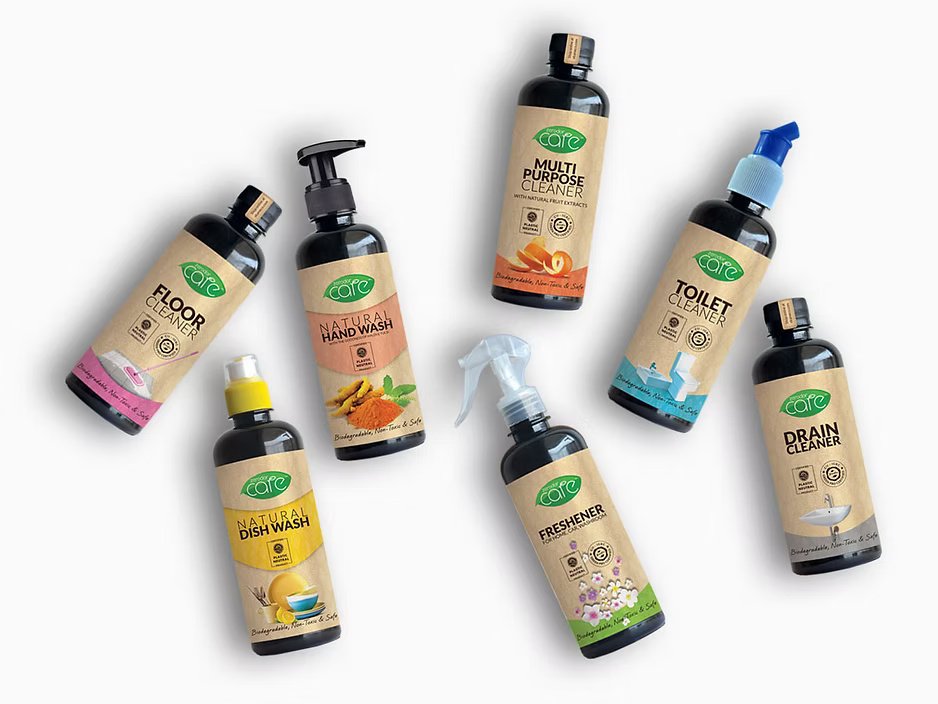
The CARE Natural Dish Wash Liquid and CARE Natural Multi-Purpose Cleaner are examples of products designed for these everyday cleaning jobs. The CARE range also includes a natural kitchen drain cleaner for drain maintenance.
Cleaning spills away is a habit. Fresh spills are easier to wipe than layers that sit for days. By cleaning spills you avoid stains and messes that grow. Steps like this make a difference in keeping a home clean.
2. The Bathroom: Clean Doesn’t Have to Mean Overpoweringly Strong
Bathrooms deserve a cleaning perspective. Water, humidity, soap buildup and natural grime make bathrooms hard to keep clean after showers. Toilets, basins, taps, showers and floors each need their care method in the morning. A common error is thinking that a strong odor equals a room that stays strong for days. That belief is simply false.
A strong fragrance can simply tell you that a fragrance has been added. What matters is whether the product is appropriate for the surface and cleaning task.
The CARE Natural Toilet Cleaner is designed for toilet pans as well as surfaces such as washbasins, slabs, showers, taps and tubs, according to the product information. For bathroom drains, the CARE range also includes a restroom drain cleaner.
For everyday bathroom maintenance:
- Clean wet areas regularly rather than allowing residue to build up.
- Use products for each purpose you always need.
- Keep the bathroom ventilated while you clean and keep the bathroom ventilated for safety today.
- Never mix cleaning products unless the label clearly says products are safe to mix.
- Store cleaning products away from children.
That last point matters everywhere in the house, but particularly in homes with young children. The American Academy of Pediatrics advises to read each product label to ventilate the area when cleaning and to keep cleaning products out of reach from children and pets.
3. The Living Room: Don’t Turn Everyday Dusting Into a Chemical Routine
The living room may look clean. Daily life brings mess. People sit on sofas, children run on the floor, and guests. Leave. Windows let in dust and surfaces that everyone touches slowly gather grime. Every day the living room turns from neat to needing to be clean today.
You don’t necessarily need several specialized products. A good multipurpose cleaner can be useful for appropriate hard surfaces such as tables, selected furniture surfaces, kitchen-adjacent areas and other washable household surfaces. The important part is checking whether the product is suitable for the material. The CARE Natural Multi-Purpose Cleaner is positioned for household surfaces and is part of the broader CARE cleaning range.
For floors use a floor-cleaning solution instead of assuming that one product works equally well everywhere. The CARE Natural Floor Cleaner is formulated for floor cleaning and is listed for surfaces including wooden floors, glass and marble tiles. Remember: cleaning is not only about the liquid you use. Regular dusting, vacuuming or sweeping washing , cleaning clothes and allowing rooms to air out can reduce the amount of dirt and dust that accumulates in the first place, for better results every morning.
4. The Car: A Small Space That Can Hold a Lot of Smell
Technically, the car is not a room inside your home. The car acts like a room in a key respect. The car is a closed space where people share the same air. Food wrappers, wet clothes, shoes, upholstery and spills all add to smells. The easy fix is often a fragrance.
Masking a smell is not the same, as removing the source of the smell. Start with the basics: get rid of rubbish, clean spills, wipe surfaces that people touch often and clean the upholstery sometimes based on its material. Ventilate the car when you can. If you still want a freshener pick one made for the car. Follow the directions.
The CARE Natural Room and Car Freshener is designed for rooms, cars and indoor spaces. The bigger lesson is simple: fix the source of the smell before you try to cover the smell. That principle works the same in kitchens, bathrooms and living rooms.
5. The Child’s Room: Less Clutter, Less Exposure, Better Cleaning
A child’s room needs an extra thought—not because every household cleaner is dangerous but because children see and use a child’s room in a different way. Children may. Play on floors, touch furniture and toys many times and bring their hands close to their mouths.
The American Academy of Pediatrics says that these behaviors can raise children’s chances of touching substances in the environment. This is where a simpler cleaning routine makes sense. Use a multipurpose cleaner on all hard surfaces and use a special floor cleaner just for the floor.
Keep cleaning products locked away from leaving bottles under the sink or on a shelf that children can reach. A hand‑wash routine is also important; encourage children to wash their hands after the toilet before eating and, after playing. The CARE Natural Hand Wash is part of the CARE range. It is sold as a biodegradable skin‑friendly hand‑washing solution.
Importantly do not clean a child’s room by spraying everything with a strong scented product. Open windows when cleaning dust and dirt physically and let surfaces dry fully before children come back.
What Does “Chemical-Free Cleaning” Actually Mean?
There is an important distinction here. Technically almost everything around us is made of chemicals so “chemical-free” is not accurate. When people say “or “chemical-free” cleaning they usually mean avoiding harsh synthetic products and choosing safer, more eco-friendly ingredients. Be careful with labels. The EPA warns that terms like “green,” “eco-safe “. Environmentally friendly” can be misleading. These words are often used for marketing, not science. Always check the ingredients. Don’t rely on claims. Look for transparency. Choose products with safe ingredients. Being informed helps make choices. Stay mindful.
Looking at credible certifications, ingredient information and product instructions is more useful than relying on a label alone. CARE cleaners, for example, use active bio-enzymes and microorganisms alongside fruit extracts and vinegars, according to Ekam Eco Solutions’ product information.
Do not aim to swap every bottle in your house all at once. First locate the products you use often. Then think if a greener option works for those tasks. A careful bottle change can reduce waste today everywhere.
A Simpler Cleaning Rule for Indian Homes
You don’t need a cupboard full of twenty different cleaning products. A practical starting point is:
Kitchen: dish wash + multipurpose cleaner + floor cleaner + drain care
Bathroom: toilet cleaner + floor cleaner + drain care + hand wash
Living room: multipurpose cleaner + floor cleaner
Car: appropriate surface cleaner + room/car freshener
Child’s room: suitable multipurpose cleaner + floor cleaner + hand wash
This approach makes cleaning easier to organize and helps reduce the temptation to use one product for every surface. There is one rule that matters no matter which brand you choose: read the label, follow the recommended use, ventilate when needed and never mix cleaning products unless it is clearly instructed.
A cleaner home does not have to smell like a chemical laboratory. Sometimes the better choice is simply selecting products carefully using only what is needed and creating habits room by room that are better, for the home and the environment.
Frequently Asked Questions
1. What is chemical-free cleaning?
Chemical‑free cleaning means using harsh synthetic chemicals and picking gentler, more eco‑friendly products.
2. Which room should I switch to natural cleaning products first?
The kitchen and bathroom are the places to try natural cleaning products because they get dirty a lot and touch food, food surfaces and the air inside. These rooms are good starting points for cleaning.
3. Are natural cleaning products effective?
Yes, natural or enzyme‑based cleaners can work well for dirt, grease, stains and organic build‑up when used the right way for the specific cleaning job. Chemical‑free cleaning can also be achieved with these products.
4. Can I use one cleaner for every room?
Not always. A multipurpose cleaner can clean surfaces but floors, toilets, dishes and drains usually need products made especially for those tasks. For chemical‑free cleaning use a cleaner for each area.
5. Are natural cleaners safer for homes with children?
Choosing well‑formulated cleaners can lower exposure to harsh ingredients. Still safe storage and correct use are very important in homes with children. Chemical‑free cleaning is safer when you follow these steps.
6. How can I make my home smell fresh without strong chemicals?
Keep rooms well ventilated, get rid of the source of smells and clean regularly. A natural room or car freshener can be added when needed. Chemical‑free cleaning keeps the air cleaner.
7. Should I replace all my cleaning products at once?
No. A sensible plan is to change products starting with the kitchen, bathroom and children’s room where cleaning happens most often. For chemical‑free cleaning do this gradually.
8. Is “chemical-free” always a reliable product claim?
Not always. Look at the ingredients and follow the instructions. Check credible certifications. Do not trust words, like “natural” or “eco‑friendly” without proof. Chemical‑free cleaning requires checking.