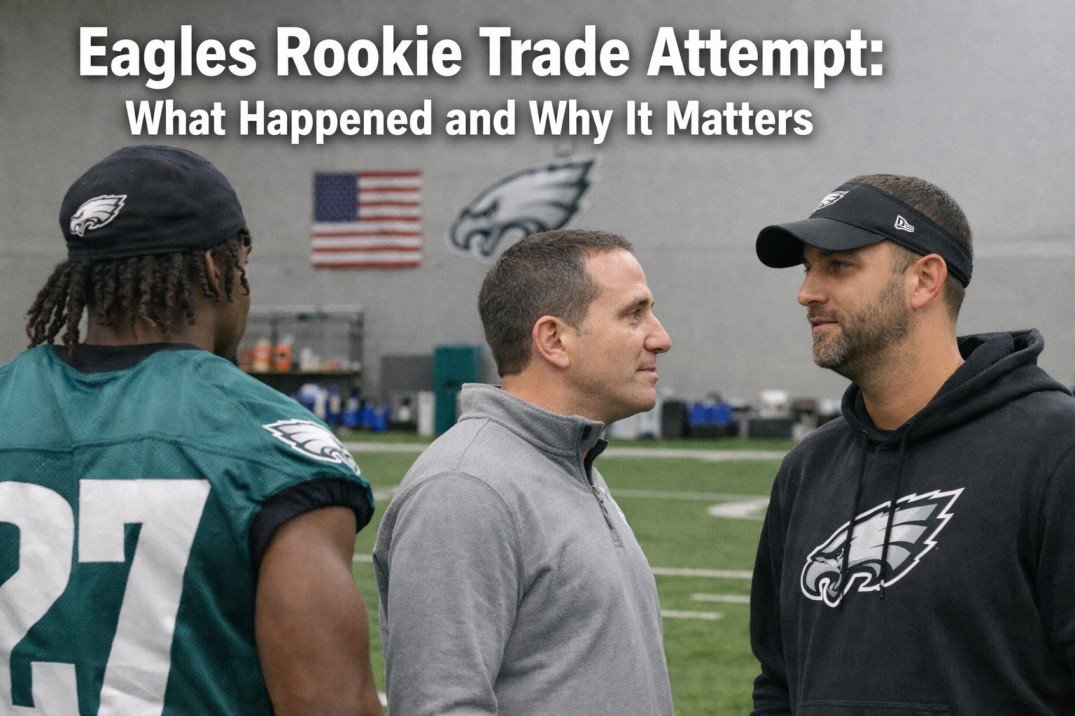
The Philadelphia Eagles are no strangers to bold roster moves, aggressive draft-day trades, and strategic player acquisitions. Over the years, the franchise has built a reputation for creative front-office decisions that aim to keep the team competitive in the ever-demanding NFL landscape. Recently, reports of an Eagles rookie trade attempt caught the attention of fans and analysts alike. While the move did not ultimately materialize, it sparked widespread discussion about team strategy, rookie contracts, and long-term roster planning.
What Happened in the Eagles Rookie Trade Attempt
The Eagles reportedly explored the possibility of trading one of their recently drafted rookies shortly after the NFL Draft. While rookie trades are relatively uncommon, they are not unheard of in the league. The attempt was said to involve discussions with another team regarding compensation in the form of future draft picks or player swaps.
However, negotiations did not result in a finalized deal. The reasons behind the stalled trade could range from disagreements over player valuation to contract structure concerns or evolving team needs. Because rookie contracts follow strict NFL salary cap rules, teams must carefully evaluate financial implications before completing such trades.
Although the move never became official, the mere attempt highlights the Eagles’ willingness to remain flexible and opportunistic in shaping their roster.
Why Rookie Trades Are Rare in the NFL
Rookie trade attempts generate attention because they are uncommon, particularly immediately after the draft. Once a team invests draft capital in a player, the expectation is that the rookie will develop within the system.
Several factors make rookie trades challenging:
Salary cap considerations tied to rookie contracts
Uncertainty about long-term player development
Potential public perception issues
Limited evaluation time before preseason games
Under the NFL’s rookie wage scale, first-year contracts are largely predetermined based on draft position. This structure can limit negotiation flexibility and influence trade discussions. For a team like the Eagles, every roster move must align with cap management and future planning.
The Eagles’ Aggressive Front Office Strategy
The Philadelphia Eagles’ front office, led by General Manager Howie Roseman, has built a reputation for calculated risk-taking. Roseman has previously executed high-profile trades involving draft picks, veteran players, and future assets.
From draft-day maneuvering to mid-season roster adjustments, the Eagles consistently explore ways to strengthen depth and maintain competitiveness in the NFC. A rookie trade attempt fits within this broader philosophy of maximizing value and staying ahead of league trends.
The Eagles’ approach emphasizes flexibility. If management believes a drafted player’s value exceeds their projected role within the team, exploring trade options becomes a strategic possibility rather than an unusual gamble.
Potential Reasons Behind the Trade Attempt
Although specific internal discussions remain private, several plausible reasons could explain the Eagles’ interest in trading a rookie:
Roster Depth at a Specific Position
If the team is already strong at a rookie’s position, management may consider converting that asset into future draft capital.
Strategic Draft Positioning
Teams sometimes draft players with strong market value, anticipating the possibility of flipping them for better long-term assets.
Cap Space Optimization
Even rookie contracts impact the salary cap. If financial flexibility is needed for future extensions or free-agent signings, a trade may be considered.
Scheme Fit Concerns
Coaching evaluations after rookie minicamps and OTAs sometimes reveal that a player may not be the ideal fit for the team’s system.
Each of these factors plays a role in the complex decision-making process behind NFL roster construction.
Impact on Team Chemistry and Development
Attempting to trade a rookie can carry implications beyond the salary cap and draft picks. Team culture and locker room dynamics are essential components of success. If players perceive instability or uncertainty regarding roster decisions, it may influence morale.
However, in a professional sports environment like the NFL, players understand that trades are part of the business. The Eagles’ coaching staff likely prioritizes communication and transparency to maintain focus during offseason programs and training camp.
From a development standpoint, retaining the rookie after a failed trade attempt can sometimes motivate the player to prove their value on the field. Competitive drive often increases when athletes feel the need to secure their role.
Why This Matters for the Eagles’ Future
The attempted rookie trade highlights the Eagles’ commitment to proactive roster management. Rather than passively accepting draft outcomes, the organization actively reassesses decisions based on evolving needs.
This flexibility is critical in a league defined by injuries, performance fluctuations, and shifting competitive windows. By exploring trade opportunities, the Eagles demonstrate a willingness to adapt quickly.
For fans, the situation underscores the complexity of NFL team building. Drafting a player is only the beginning of a larger strategic process involving scouting, contract evaluation, depth chart analysis, and long-term cap planning.
Broader Implications for the NFL
The Eagles rookie trade attempt also sparks conversation about league-wide trends. As front offices become more analytics-driven, teams may increasingly view draft picks as movable assets rather than fixed commitments.
The evolving nature of roster construction could make rookie trades slightly more common in the future, especially when teams believe they can gain strategic advantages. However, such moves will likely remain rare due to contractual structures and developmental priorities.
Frequently Asked Questions
Did the Eagles complete the rookie trade?
No, the reported rookie trade attempt by the Philadelphia Eagles did not result in a finalized deal.
Why would a team trade a rookie so quickly?
Teams may explore trading a rookie due to roster depth, cap considerations, strategic draft value, or concerns about scheme fit.
Are rookie trades common in the NFL?
Rookie trades are relatively rare because teams typically prefer to develop draft picks within their system.
Does a failed trade attempt affect a rookie’s future?
Not necessarily. Many players continue to develop successfully after trade rumors, using the situation as motivation to perform better.
Who manages trade decisions for the Eagles?
Trade decisions are overseen by the front office, led by General Manager Howie Roseman, in coordination with coaches and ownership.
Disclaimer
This article is based on publicly available reports and general NFL roster management practices. Specific trade discussions, negotiations, and internal team decisions may not be fully disclosed. Information may evolve as new details emerge, and readers are encouraged to follow official Philadelphia Eagles announcements and credible sports news sources for the latest updates.