
Local SEO for Healthcare: How Doctors Can Get More Patients
These days, when someone needs a doctor, the first thing they do isn’t call a friend or flip through a directory — they open Google. “Dentist near me,” “best skin specialist in Delhi,” “orthopedic doctor near me” — searches like these happen thousands of times a day, in every city, every hour. The patient looking for care right now has already started their search before they’ve even thought about which clinic to walk into.
That’s the uncomfortable truth for a lot of doctors and practice owners: if your clinic isn’t showing up properly on Google, you are quietly losing patients every single day — regardless of how skilled you are, how many years of experience you have, or how good your actual patient outcomes are. Being excellent at medicine and being visible online have become two completely separate battles, and increasingly, you have to win both.
This guide breaks down what local SEO actually is, why it matters so much specifically for healthcare providers, and exactly how to start improving it — step by step.
What Is Local SEO, Really?
Local SEO is the process of optimizing your online presence so that when someone nearby searches for a healthcare service, your practice is one of the first things they see. It’s different from general SEO in one key way: general SEO competes on a national or global scale, while local SEO is only concerned with patients within your actual service area — the people who could realistically walk into your clinic.
Put simply: when someone types “cardiologist near me” or “urgent care open now,” local SEO is what decides whether your practice shows up at the top of the results, appears in Google’s local map pack, or gets buried under three competitors on page two — which, for most searchers, might as well not exist at all.
For doctors, hospitals, and independent clinics, local SEO isn’t a vanity metric. It’s the digital equivalent of your clinic being located on the busiest street corner in town versus being tucked away in an alley nobody walks down.
Why This Matters So Much for Doctors
Patient decision-making in healthcare has become deeply research-driven over the past few years. Very few patients today pick a doctor purely on a friend’s recommendation without also checking them out online first. Most will research a provider’s reviews, compare a few nearby options, look at their website, and only then decide who to call or book with.
That shift means your digital presence has become just as important as your front desk — because a patient’s first real interaction with your practice happens on their phone screen, not in your waiting room. The way your clinic appears online — complete profile, strong reviews, clear information — often determines whether a patient even considers you as an option.
There’s another layer to this too: reviews and ratings aren’t just a trust signal anymore, the way a plaque on your office wall might be. They’ve become an actual ranking factor. Practices with more reviews, better ratings, and recent, active review activity tend to rank higher in local search results — which means good patient experiences aren’t just good for retention, they directly fuel new patient acquisition too.

Practical Local SEO Strategies for Doctors and Clinics
1. Fully Optimize Your Google Business Profile
This is, without question, the single most important step in local SEO for any healthcare practice. Your Google Business Profile is often the very first thing a patient sees — before they ever click through to your website.
Make sure your practice’s name, address, and phone number are accurate. List your actual working hours, including holidays and half-days. Add clear descriptions of the services and specialties you offer. Upload real photos of your clinic — the exterior, the reception area, and (with consent) your team. An incomplete or outdated profile doesn’t just look unprofessional; it also actively hurts your ranking, since Google favors profiles that are complete, active, and regularly updated.
2. Keep Your NAP Consistent Everywhere
NAP stands for Name, Address, and Phone number, and consistency here matters more than most doctors realize. Your practice details should match exactly across your website, Google Business Profile, Practo, Justdial, and any other directory you’re listed on.
Even a small mismatch — an old phone number on one directory, a slightly different address format on another — can confuse Google’s algorithms about which listing is “real,” which in turn quietly damages your rankings across the board.
3. Make Patient Reviews a Genuine Priority
Politely asking every satisfied patient for a review — right after a positive visit, when the experience is still fresh — is a simple habit that compounds over time. A steady stream of recent, genuine reviews signals to Google (and to future patients) that your practice is active and trusted.
Just as important: respond to every review, whether it’s glowing or critical. A thoughtful, professional response to a negative review often does more for your reputation than ten five-star reviews with no engagement at all. It shows prospective patients that you take feedback seriously and care about their experience.
4. Use Location-Specific Keywords Naturally
Weave your location into your website content in a way that reads naturally, not forced. Phrases like “child specialist in Panipat” or “best physiotherapist near [your area]” help Google clearly understand exactly where you serve patients — which matters enormously for how you rank in geographically specific searches.
This applies to page titles, headings, service descriptions, and even the alt text on your images.
5. Publish Community-Focused, Helpful Content
Seasonal health tips, updates about local health camps you’re involved in, or practical advice relevant to conditions common in your specific area don’t just help the patients who read them — they build your website’s authority in Google’s eyes, which local search algorithms reward with better rankings over time.
This kind of content also does double duty: it positions you as a knowledgeable, approachable expert before a patient has even met you in person.
6. Keep the Website Experience Smooth and Fast
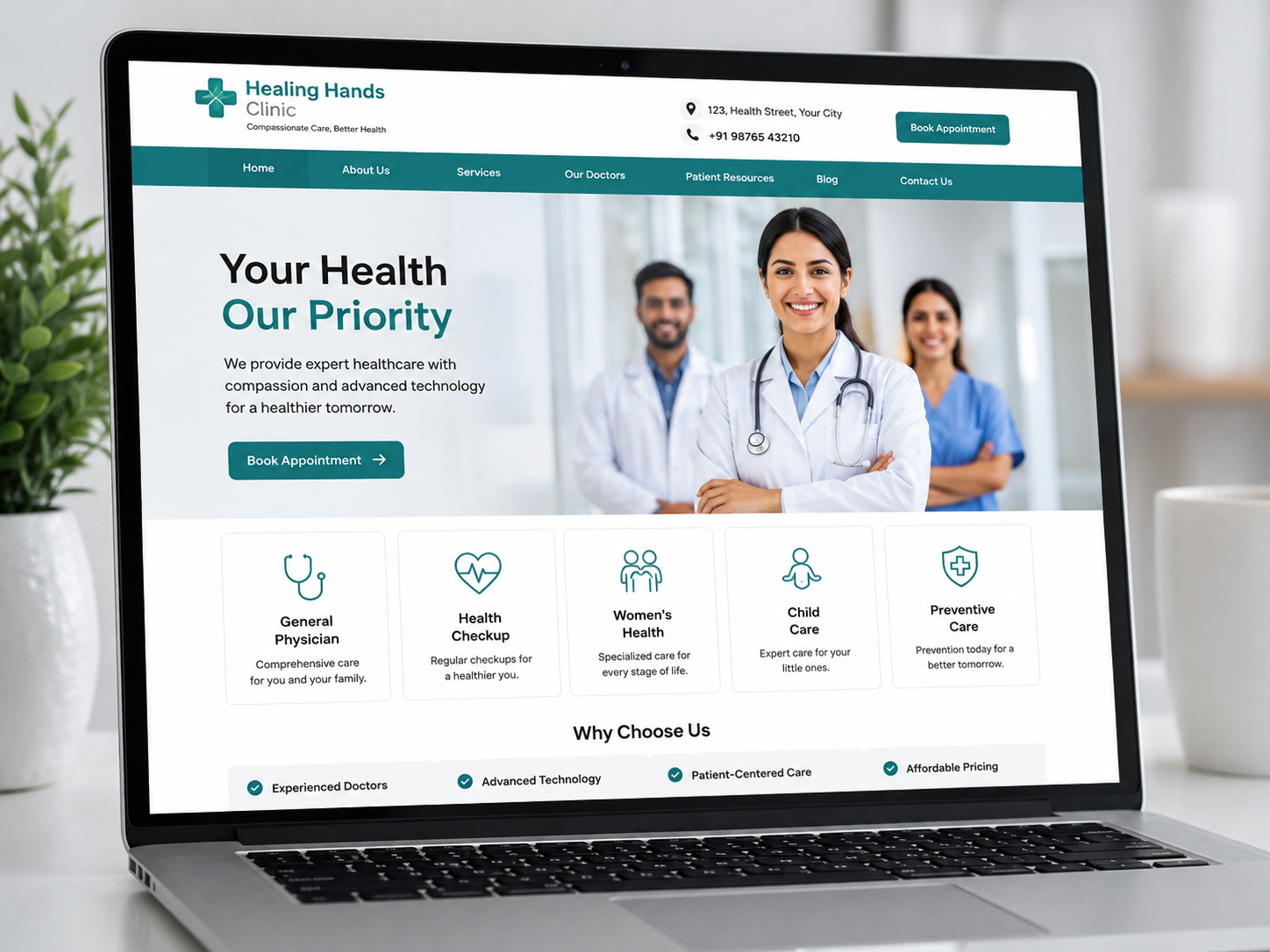
Visibility alone isn’t enough if patients bounce off your site the moment they land on it. If your website loads slowly, isn’t mobile-friendly, or has a clunky appointment booking form, patients will simply give up and call the next clinic on the list instead.
Your website should feel every bit as smooth, welcoming, and reliable as your actual front desk experience.
7. Stay Active on Q&A and Community Platforms
Thoughtfully answering healthcare-related questions on platforms like Reddit, Quora, or local community forums — without being overly promotional — builds goodwill and visibility over time. It also occasionally drives direct traffic and citations back to your site, which further strengthens your local search presence.
Frequently Asked Questions
Q1: How long does it take to see results from local SEO?
Local SEO is a gradual process, not an overnight fix. Most practices start noticing meaningful improvements in visibility and patient inquiries within three to six months of consistent effort — though smaller wins, like appearing correctly in Google Maps searches, can happen much sooner once your Google Business Profile is properly optimized.
Q2: Do I need a big budget or marketing team to do local SEO?
Not necessarily. Many of the highest-impact steps — optimizing your Google Business Profile, keeping your NAP consistent, and actively collecting reviews — cost nothing but time and consistency. A bigger budget helps you move faster and scale content or paid promotion, but it isn’t a strict requirement to get started.
Q3: How many reviews does my practice actually need?
There’s no magic number, but more recent, genuine reviews generally help. What matters more than raw volume is consistency — a steady trickle of new reviews over time looks far more trustworthy to both patients and Google than a big cluster of old reviews with nothing recent.
Q4: Should I respond to negative reviews, or just ignore them?
Always respond, and always do it professionally and calmly. A well-handled negative review, addressed with empathy and without being defensive, often reassures prospective patients more than it damages your reputation. Ignoring negative feedback, on the other hand, can make a practice look unresponsive or indifferent.
Q5: Is local SEO different from running Google Ads for my clinic?
Yes, they’re related but different. Local SEO builds your organic, unpaid visibility over time — it’s a long-term asset. Google Ads gets you paid placement instantly, but that visibility disappears the moment you stop paying. Most successful practices eventually use both, but local SEO tends to offer better long-term value per patient acquired.
Q6: Can one clinic realistically manage its own local SEO, or do I need an agency?
A solo practitioner or small clinic can absolutely handle the fundamentals in-house — optimizing the Google Business Profile, requesting reviews, and keeping directory listings consistent don’t require specialized technical skills. Agencies become more useful when you want faster results, more advanced content strategy, or you simply don’t have the time to manage it consistently yourself.
The Bottom Line
Local SEO isn’t a one-time task you check off a list — it’s an ongoing habit, and consistency matters more than any single trick or tactic. Doctors and clinics that stay on top of their Google presence, actively and genuinely manage patient reviews, and keep publishing helpful local content are the ones who end up winning both patient trust and steady appointment bookings over time.
Start small: fully optimize your Google Business Profile this week, and begin asking every happy patient for a review. Once those two habits are in place, build the rest of your strategy from there — one consistent step at a time.