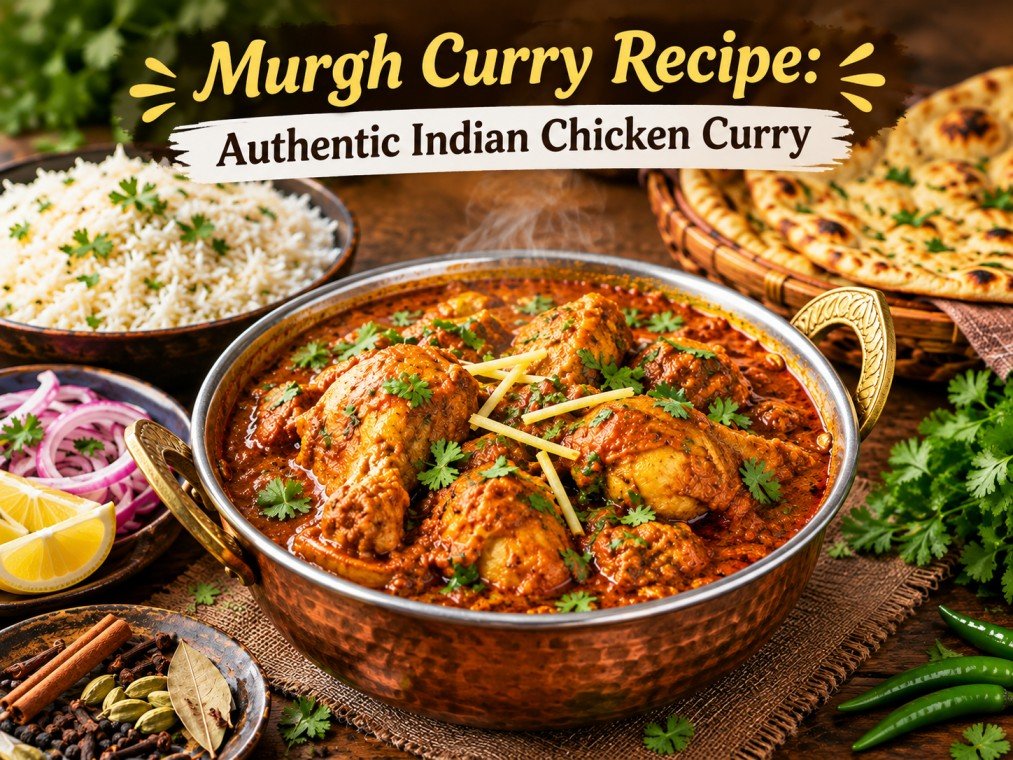
Murgh curry is a classic Indian chicken dish made by cooking tender chicken in a rich, aromatic gravy of onions, tomatoes, yogurt, and traditional Indian spices. This murgh curry recipe is simple enough for a home kitchen while delivering the deep, comforting flavors associated with Indian-style chicken curry.
The secret to a flavorful murgh curry is not just the spices. Browning the onions properly, cooking the masala patiently, and allowing the chicken to simmer in the gravy helps develop a rich and balanced taste. You can serve it with basmati rice, jeera rice, roti, naan, or paratha.
Table of Contents
ToggleWhat Is Murgh Curry?
“Murgh” is a common Hindi and Urdu word for chicken, so murgh curry simply means chicken curry. Across India, the recipe varies from region to region. Some versions use tomatoes and yogurt, while others rely more heavily on onions, whole spices, coconut, or cream.
This version focuses on a classic North Indian-style curry with a thick, flavorful onion-tomato masala and warm spices.
Murgh Curry Recipe at a Glance
Prep time: 15–20 minutes
Marinating time: 20–30 minutes
Cooking time: 35–45 minutes
Total time: About 1 hour
Servings: 4
Cuisine: Indian
Main ingredient: Chicken
Ingredients for Murgh Curry
For the Chicken
- 750 g chicken, preferably bone-in pieces
- ½ cup plain yogurt
- 1 tablespoon ginger-garlic paste
- ½ teaspoon turmeric powder
- 1 teaspoon Kashmiri red chili powder
- ½ teaspoon salt
- 1 tablespoon lemon juice
For the Curry
- 2–3 tablespoons cooking oil
- 1 large onion, finely sliced
- 2 medium tomatoes, finely chopped or pureed
- 1 tablespoon ginger-garlic paste
- 1–2 green chilies, slit
- 1 teaspoon cumin seeds
- 1 bay leaf
- 1 small cinnamon stick
- 3–4 green cardamom pods
- 3–4 cloves
- ½ teaspoon turmeric powder
- 1 teaspoon coriander powder
- 1 teaspoon cumin powder
- 1 teaspoon Kashmiri red chili powder
- ½ teaspoon garam masala
- Salt to taste
- 1½–2 cups hot water, as needed
- 1 tablespoon chopped fresh coriander
How to Make Murgh Curry
1. Marinate the Chicken
Place the chicken in a large bowl. Add yogurt, ginger-garlic paste, turmeric, Kashmiri chili powder, salt, and lemon juice.
Mix thoroughly so every piece is coated. Cover and leave it for at least 20–30 minutes. If you have more time, refrigerating the chicken for a few hours can help the flavors penetrate more deeply.
2. Heat the Oil and Add Whole Spices
Heat oil in a heavy-bottomed pot or deep pan over medium heat.
Add cumin seeds, bay leaf, cinnamon, cardamom, and cloves. Let them sizzle for a few seconds until aromatic.
Do not burn the whole spices because burnt spices can make the curry bitter.
3. Brown the Onions
Add the sliced onions and cook over medium heat until they become golden brown.
This step is particularly important. Well-cooked onions provide sweetness, color, body, and depth to the curry.
Avoid cooking them too quickly over very high heat because the outside can burn before the onions develop their proper flavor.
4. Add Ginger-Garlic Paste and Green Chilies
Add ginger-garlic paste and green chilies. Cook for about 1–2 minutes until the raw smell disappears.
Keep stirring to prevent the paste from sticking to the bottom of the pan.
5. Cook the Tomato Masala
Add the chopped or pureed tomatoes.
Now add turmeric powder, coriander powder, cumin powder, Kashmiri red chili powder, and salt.
Cook the mixture over medium heat, stirring occasionally, until the tomatoes soften and the oil begins to separate from the masala.
This can take around 8–12 minutes depending on the moisture in the tomatoes.
6. Add the Marinated Chicken
Add the marinated chicken to the masala.
Increase the heat slightly and cook for 5–7 minutes, stirring regularly. The chicken should become coated in the thick masala.
This initial cooking helps build a stronger flavor before adding water.
7. Add Water and Simmer
Pour in about 1½ cups of hot water and mix well.
Bring the curry to a gentle boil, then reduce the heat. Cover the pan and let the chicken simmer until it is completely cooked and tender.
Bone-in chicken generally produces a richer curry because the bones add flavor to the gravy.
8. Finish With Garam Masala
Once the chicken is cooked, check the consistency and seasoning.
Add garam masala and chopped fresh coriander. Simmer uncovered for another 2–3 minutes.
If you prefer a thicker gravy, cook for a few additional minutes. For a thinner curry, add a little hot water.
9. Rest Before Serving
Turn off the heat and let the curry rest for about 5 minutes before serving.
This short resting period allows the flavors to settle and the gravy to become more cohesive.
Tips for Making the Best Murgh Curry
Use Bone-In Chicken for More Flavor
Bone-in chicken is an excellent choice when you want a richer, more traditional curry. Boneless chicken works too, but it generally cooks faster.
Don’t Rush the Onion
Golden-brown onions create an important flavor foundation. Pale, undercooked onions can leave the curry tasting flat.
Cook the Masala Properly
The onion-tomato masala should be cooked until it becomes thick and the oil begins to separate. This is one of the most important stages of the recipe.
Adjust the Heat to Your Taste
Kashmiri chili powder mainly adds color with moderate heat, while fresh green chilies can increase the spiciness. Adjust both according to your preference.
Don’t Overcook the Chicken
Chicken should be cooked until tender but not left simmering unnecessarily long, especially when using boneless pieces.
What to Serve With Murgh Curry
Murgh curry pairs well with many Indian breads and rice dishes.
Try serving it with:
- Steamed basmati rice
- Jeera rice
- Plain roti
- Butter naan
- Garlic naan
- Tandoori roti
- Paratha
- Pulao
For a complete meal, serve the curry with sliced onions, lemon wedges, cucumber salad, raita, or a simple green salad.
Murgh Curry Variations
Creamy Murgh Curry
For a richer curry, add 2–3 tablespoons of cream toward the end of cooking. Keep the heat low after adding the cream.
Spicy Murgh Curry
Increase the amount of green chilies or red chili powder. You can also add a small amount of freshly ground black pepper for extra warmth.
Coconut Murgh Curry
For a South Indian-inspired variation, replace part of the water with coconut milk and add curry leaves.
Dhaba-Style Murgh Curry
For a dhaba-style version, use a little extra oil, cook the masala thoroughly, and finish with fresh coriander and ginger julienne.
Boneless Murgh Curry
Boneless chicken breast or thigh can be used when you want the curry to cook faster. Reduce the cooking time to avoid drying out the chicken.
How to Store Murgh Curry
Allow leftover curry to cool before transferring it to an airtight container. Refrigerate and consume within a few days.
When reheating, warm it gently on the stovetop or in the microwave. Add a splash of water if the gravy has become too thick.
If freezing, portion the curry into suitable freezer-safe containers and thaw it safely before reheating.
Common Mistakes to Avoid
Burning the spices: Whole spices should become fragrant but not dark and burnt.
Undercooking the masala: Raw tomato and spice flavors can remain if the masala is not cooked sufficiently.
Adding too much water: Start with less water and adjust the consistency later.
Overcooking boneless chicken: Boneless pieces can become dry when cooked for too long.
Adding too much garam masala: Garam masala is potent, so a small amount is usually enough.
Frequently Asked Questions About Murgh Curry
What is murgh curry made of?
Murgh curry is generally made with chicken, onions, tomatoes, yogurt or another richening ingredient, ginger-garlic, and a combination of Indian spices. Recipes vary considerably by region and cooking style.
Is murgh curry the same as chicken curry?
Yes. “Murgh” means chicken, so murgh curry is essentially an Indian-style chicken curry. However, recipes differ depending on the region and ingredients used.
Can I make murgh curry without yogurt?
Yes. Yogurt can be omitted. You can use a little extra tomato or another suitable ingredient to provide body and balance to the gravy.
Can I use boneless chicken?
Yes. Boneless chicken works well and cooks faster. Chicken thighs are particularly useful when you want tender, flavorful pieces.
How can I make murgh curry less spicy?
Reduce the green chilies and hot chili powder. Using Kashmiri chili powder can provide a vibrant red color without making the curry extremely hot.
Why does my chicken curry taste bland?
Common reasons include insufficient seasoning, undercooked onion-tomato masala, or adding too much water. Cooking the masala properly and balancing salt and spices can make a significant difference.
How do I thicken chicken curry?
Simmer the curry uncovered for several minutes so excess water evaporates. The onion and tomato base will naturally help thicken the gravy.
Final Thoughts
This murgh curry recipe is a practical way to make a flavorful Indian chicken curry at home using familiar ingredients and traditional cooking techniques. The combination of browned onions, tomatoes, yogurt, whole spices, and tender chicken creates a rich gravy that works equally well for a family dinner or a special weekend meal.
For the best results, take your time with the onion and masala stages, adjust the spices to your taste, and allow the finished curry to rest briefly before serving. Pair it with rice or fresh Indian bread, and you have a comforting homemade meal ready to enjoy.