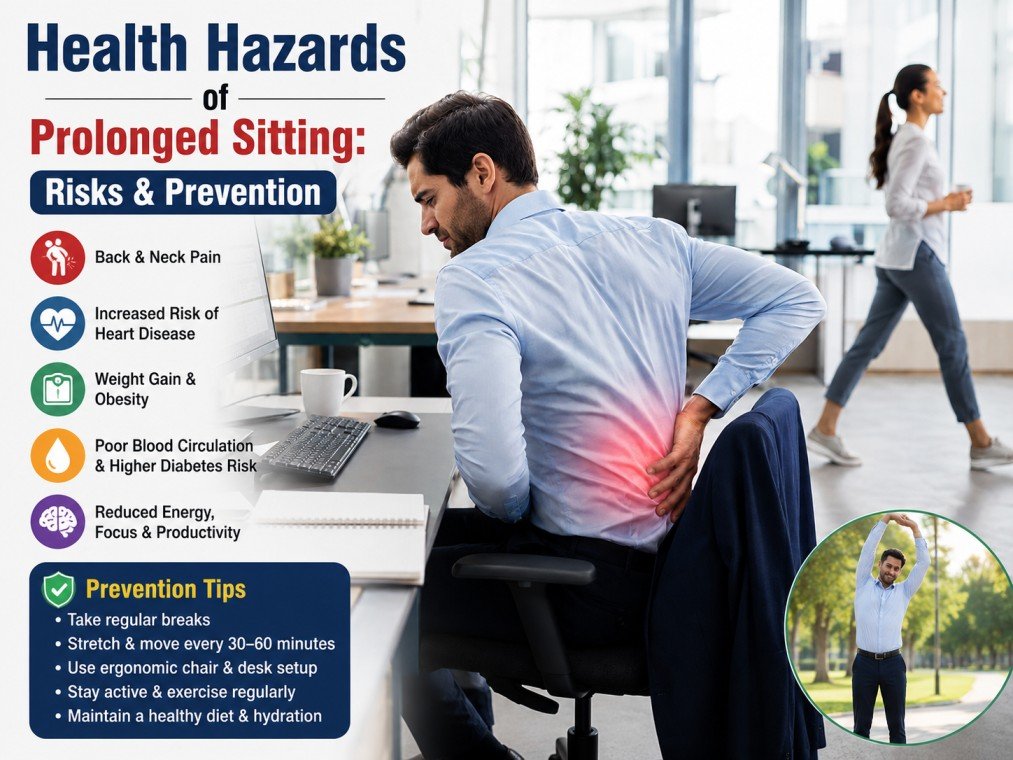
Sitting for long periods has become a normal part of modern life. Office work, online classes, driving, gaming, watching television and spending hours on smartphones can all increase daily sedentary time. While sitting itself is not harmful when balanced with regular movement, spending a large portion of the day inactive is associated with several health risks.
The World Health Organization (WHO) recommends that adults limit sedentary behaviour and replace sedentary time with physical activity of any intensity, including light activity. Higher amounts of sedentary behaviour are associated with poorer health outcomes, including cardiovascular disease, type 2 diabetes and certain cancers.
Table of Contents
ToggleWhat Is Prolonged Sitting?
Prolonged sitting means spending extended periods sitting or reclining while awake with very little physical activity. It can happen at work, while travelling, studying, watching television or using digital devices.
There is no universally established number of hours that defines exactly when sitting becomes dangerous for every person. WHO notes that evidence is not strong enough to establish one specific time-based limit for sedentary behaviour. Instead, the general recommendation is to reduce sedentary time and increase movement.
Health Hazards of Prolonged Sitting
1. Increased Risk of Cardiovascular Problems
One of the major health concerns associated with prolonged sitting is cardiovascular health. Spending large amounts of time sedentary is associated with a higher risk of cardiovascular disease and cardiovascular mortality.
When daily movement is very low, overall energy expenditure decreases and the body receives fewer opportunities for muscle activity. Regular physical activity, on the other hand, is associated with better cardiovascular health and a lower risk of several chronic diseases.
2. Higher Risk of Type 2 Diabetes
Long periods of sedentary behaviour are also associated with a greater risk of type 2 diabetes. Reduced physical activity can affect glucose metabolism and insulin sensitivity.
This does not mean that everyone who sits for long periods will develop diabetes. Diet, body weight, genetics, sleep, physical activity and other lifestyle factors also influence diabetes risk. However, replacing some sitting time with movement is a useful part of a healthier lifestyle.
3. Weight Gain and Obesity
Sitting burns considerably less energy than walking or other physical activities. If prolonged sitting is combined with high-calorie food intake and insufficient exercise, it can contribute to weight gain over time.
Regular movement throughout the day can help increase energy expenditure and support healthy body weight. WHO also reports that physical activity can have favourable effects on measures of adiposity and help attenuate weight gain.
4. Back, Neck and Shoulder Pain
Musculoskeletal discomfort is another common problem for people who spend many hours at a desk.
Poor workstation setup, slouching, an improperly positioned monitor and remaining in the same posture for too long can place additional strain on the neck, shoulders and lower back.
Changing position regularly, adjusting the chair and monitor, and taking movement breaks can make long working sessions more manageable.
5. Muscle Weakness and Reduced Mobility
When the body remains inactive for extended periods, important muscle groups receive less regular use. Over time, insufficient physical activity can contribute to reduced strength, flexibility and overall fitness.
The hips and lower-body muscles may feel particularly stiff after long periods at a desk. Adding walking, stretching, mobility exercises and strength training to the week can help maintain physical function.
6. Effects on Mental Well-Being
Physical activity is also connected with mental health. WHO reports evidence that regular physical activity is associated with reduced symptoms of anxiety and depression, as well as benefits for cognitive health and sleep.
A highly sedentary routine can also mean fewer opportunities for movement, outdoor activity and social interaction. Breaking up long periods of sitting with short walks or other light activities can therefore be a practical lifestyle improvement.
7. Possible Association With Certain Cancers
Higher amounts of sedentary behaviour have been associated with cancer mortality and with the incidence of some cancers. WHO’s evidence review found associations involving cardiovascular, colon, endometrial and lung cancers, although the strength of evidence varies between outcomes.
It is important not to interpret this as proof that sitting directly causes cancer. Cancer has many risk factors, including tobacco exposure, alcohol, body weight, diet, genetics, infections and environmental factors.
8. Poor Circulation and Leg Discomfort
Remaining in one position for a long time means the leg muscles are not working as much as they would during walking or other activities. This can contribute to feelings of stiffness or discomfort.
During particularly long periods of immobility, such as extended travel, blood clots in the legs can also become a concern, especially in people with additional risk factors. Anyone experiencing sudden leg swelling, significant pain, chest pain or unexplained difficulty breathing should seek urgent medical attention.
Why Sitting for Hours Can Be a Problem
The issue is not that sitting is inherently bad. The bigger concern is a lifestyle in which sitting occupies most of the waking day and movement is limited.
For example, someone might:
- Sit at a desk for several hours.
- Remain seated during a commute.
- Eat meals while sitting.
- Watch television in the evening.
- Spend additional time on a phone or computer.
Even if a person exercises once during the day, the remaining hours can still contain substantial sedentary time. WHO therefore recommends both regular physical activity and limiting sedentary behaviour.
How to Reduce the Health Hazards of Prolonged Sitting
Take Frequent Movement Breaks
Instead of remaining seated continuously, stand up and move around periodically. Walk to get water, use the stairs, stretch or take a short walk around the workplace.
There is no scientifically established universal rule saying that every person must stand for a specific number of minutes after a specific number of sitting minutes. The practical goal is simply to interrupt long periods of inactivity regularly.
Walk More During the Day
Walking is one of the easiest ways to introduce more movement into a sedentary routine.
You can:
- Walk during phone calls.
- Take short walks during work breaks.
- Walk to nearby locations when practical.
- Use stairs instead of lifts when appropriate.
- Take an evening or morning walk.
Small amounts of activity are still worthwhile. WHO specifically states that doing some physical activity is better than doing none.
Follow Weekly Physical Activity Guidelines
For adults, WHO recommends at least 150–300 minutes of moderate-intensity aerobic physical activity per week, or 75–150 minutes of vigorous-intensity activity, or an equivalent combination. Adults should also perform muscle-strengthening activities involving the major muscle groups on at least two days each week.
People who currently do little physical activity can start gradually and increase their activity over time.
Improve Your Workstation
If you work at a computer for several hours each day, make your workstation comfortable and supportive.
Keep the monitor at an appropriate height, use a chair that provides adequate support and position the keyboard and mouse comfortably. Most importantly, avoid staying in one fixed position for hours.
Add Strength and Mobility Exercises
Walking is useful, but a balanced exercise routine can also include muscle-strengthening and mobility work.
Simple exercises such as bodyweight movements, resistance exercises, stretching and mobility exercises can complement regular aerobic activity.
People with injuries, chronic health conditions or physical limitations should choose exercises appropriate for their individual circumstances and seek professional guidance when necessary.
How Much Sitting Is Too Much?
There is no single number of sitting hours that WHO recommends as a universal cutoff for all adults. The evidence varies according to overall activity levels, age, health status and other factors. WHO recommends limiting sedentary behaviour rather than establishing a specific maximum number of sitting hours.
The practical message is simple: sit less, move more and avoid allowing long periods of inactivity to dominate your day.
Is Exercise Enough to Offset Prolonged Sitting?
Exercise provides substantial health benefits, but it should not be viewed as a reason to ignore sedentary time completely.
WHO recommends that people who spend substantial amounts of time sedentary aim for more than the minimum recommended amount of moderate-to-vigorous physical activity because higher activity levels can help attenuate some of the health risks associated with sedentary behaviour.
Therefore, a healthier routine combines planned exercise with frequent everyday movement.
A Simple Daily Strategy
People with desk-based lifestyles can make their routine more active by following a few practical habits:
- Start the day with some walking or mobility activity.
- Avoid sitting continuously for very long periods.
- Stand and move around during appropriate work breaks.
- Walk during some phone calls.
- Use stairs when suitable.
- Take a short walk after meals when practical.
- Include regular aerobic exercise during the week.
- Add strength training at least twice a week.
- Reduce unnecessary recreational screen time.
- Choose movement-based activities during leisure time.
The goal does not have to be perfection. Consistently adding more movement to an otherwise sedentary day can be a realistic and sustainable approach.
Who Should Be Especially Careful?
People who work at desks, drive for many hours, study for long periods, spend substantial recreational time on screens or have limited mobility may accumulate significant sedentary time.
Older adults and people living with chronic conditions should also aim to limit sedentary behaviour while choosing physical activities appropriate for their abilities. WHO recommends regular physical activity for older adults and encourages replacing sedentary time with activity of any intensity when possible.
Frequently Asked Questions
What are the main health hazards of prolonged sitting?
The major concerns include increased associations with cardiovascular disease, type 2 diabetes, certain cancers, reduced physical fitness and other unfavourable health outcomes. Prolonged sitting can also contribute to musculoskeletal discomfort, particularly when combined with poor posture.
Can prolonged sitting cause back pain?
Long periods in a fixed seated posture can contribute to back, neck and shoulder discomfort, particularly when workstation ergonomics and posture are poor. Regular position changes and movement can help reduce strain.
Is sitting for 8 hours a day always dangerous?
Not necessarily. Health risk depends on the overall pattern of sedentary behaviour, physical activity, age, health status and other lifestyle factors. WHO does not provide a universal maximum number of sitting hours. It recommends reducing sedentary time and increasing physical activity.
Can walking reduce the risks of prolonged sitting?
Adding walking and other physical activities can improve overall physical activity levels. WHO recommends replacing sedentary time with physical activity of any intensity because doing so provides health benefits.
How much exercise should adults get each week?
WHO recommends 150–300 minutes of moderate-intensity aerobic activity or 75–150 minutes of vigorous-intensity activity per week, plus muscle-strengthening activities on at least two days each week.
Should I use a standing desk?
A standing desk can help provide an alternative to continuous sitting, but simply standing all day is not the goal. The better approach is to regularly change positions and incorporate walking and other physical activity throughout the day.
Conclusion
The health hazards of prolonged sitting are becoming increasingly important as work, education and entertainment become more screen-based. Research reviewed by WHO links higher amounts of sedentary behaviour with several unfavourable health outcomes, including cardiovascular disease, type 2 diabetes and some cancers.
The solution is not to eliminate sitting completely. Instead, build more movement into everyday life. Take regular movement breaks, walk more, exercise consistently, strengthen your muscles and avoid spending the majority of your waking hours inactive.
A simple principle is worth remembering: sit less, move more and make physical activity a regular part of your day.
Disclaimer
This article is for general health and educational information only and is not a substitute for professional medical advice, diagnosis or treatment. Individual exercise and activity needs can vary based on age, fitness, injuries, medications and existing health conditions. Consult a qualified healthcare professional for personalised advice, particularly if you experience persistent pain, chest discomfort, unusual breathlessness, sudden weakness or other concerning symptoms.