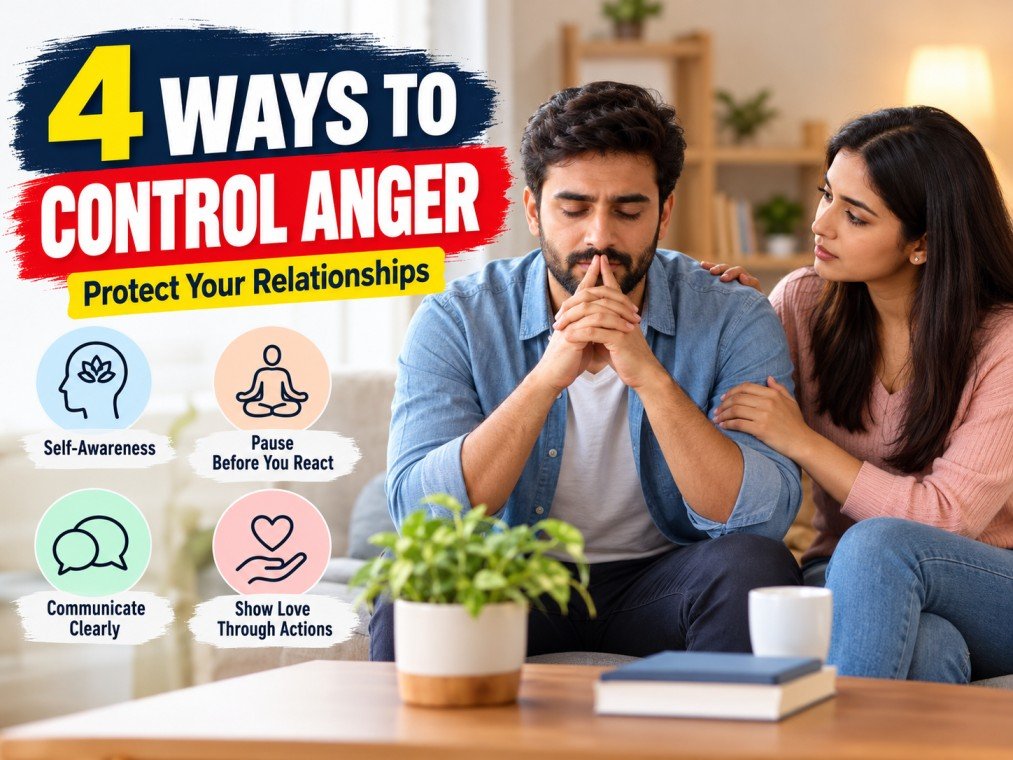
Anger is a natural human emotion, but the way we express it can have a lasting impact on our relationships. A stressful day, a misunderstanding, unmet expectations, or a disagreement with a loved one can sometimes trigger an emotional reaction. In the heat of the moment, even a few harsh words can hurt someone who matters deeply to us.
Learning how to control anger is not about hiding your feelings or pretending that nothing bothers you. It is about understanding your emotions, responding thoughtfully, and communicating without hurting others.
If you often lose your temper with your partner, children, parents, or close friends, small changes in your daily habits can help you respond more calmly. Here are four effective ways to manage anger, improve communication, and build healthier relationships.
Table of Contents
ToggleWhy Does Anger Affect Our Relationships?
Anger can arise from several sources, including stress, frustration, tiredness, unresolved disagreements, and unrealistic expectations. Sometimes, people react strongly because they feel ignored, misunderstood, disrespected, or emotionally overwhelmed.
The problem begins when anger turns into shouting, criticism, blame, or hurtful behaviour. Repeated outbursts can weaken trust and make loved ones feel uncomfortable expressing their thoughts and feelings.
Recognising your triggers is an important first step. Once you understand what causes your anger, you can begin choosing healthier ways to respond.
1. Practise Self-Awareness and Learn to Forgive Yourself
One of the first steps towards controlling anger is understanding your own emotions. Before blaming another person for making you angry, take a moment to examine what you are feeling and why.
Ask yourself a few simple questions:
- What exactly triggered my anger?
- Am I reacting to the current situation or something that happened earlier?
- Am I feeling stressed, tired, disappointed, or misunderstood?
- Will my reaction help resolve the problem or make it worse?
These questions can help you recognise patterns in your behaviour and respond more thoughtfully.
Self-awareness also means accepting that everyone makes mistakes. If you have previously hurt someone with your words or actions, acknowledge what happened and take responsibility. Instead of repeatedly criticising yourself, focus on learning from the experience and making a genuine effort to change.
Self-forgiveness does not mean ignoring the harm you may have caused. It means accepting responsibility without allowing guilt to prevent you from improving.
Practical tip: Spend five minutes each evening reflecting on situations that made you angry during the day. Write down the trigger, your reaction, and one thing you could do differently next time.
Over time, this simple habit can help you recognise emotional patterns and develop better self-control.
2. Pause Before You React
When anger rises, your first instinct may be to argue, raise your voice, or respond immediately. However, reacting while emotions are intense can make a small disagreement much worse.
Taking a short pause gives you time to calm down and think clearly.
Try these simple techniques when you feel your temper rising:
Take slow, steady breaths
Breathe in gently through your nose and slowly breathe out. Repeat this several times while relaxing your shoulders and jaw. Focus on your breathing instead of continuing the argument in your mind.
Step away temporarily
If a conversation becomes too heated, explain that you need a short break. You could say, “I’m feeling upset right now. I need a little time to calm down, and then we can talk about this.”
Make sure to return to the conversation when you are ready, rather than using the break to avoid the issue indefinitely.
Avoid sending angry messages
Written messages can be misunderstood, especially when they contain accusations or harsh language. If you are angry, wait until you feel calmer before replying to a text, email, or social media message.
A pause is not a sign of weakness. It is a practical way to prevent temporary emotions from causing lasting damage.
3. Challenge Negative Thoughts and Communicate Clearly
Sometimes, anger becomes stronger because of the meaning we attach to another person’s behaviour.
For example, if your partner forgets something important, you might immediately think, “They don’t care about me.” If a family member disagrees with you, you might interpret it as disrespect.
These conclusions may not always reflect the other person’s intentions.
Before reacting, consider whether there could be another explanation. Ask questions instead of assuming the worst, and give the other person an opportunity to explain their perspective.
Use calm, respectful language
The way you express your feelings can make a significant difference.
Instead of saying, “You never listen to me,” try saying, “I feel unheard when I cannot finish explaining my thoughts.”
Instead of saying, “You always create problems,” try saying, “I’m frustrated about what happened, and I’d like us to find a solution.”
This approach allows you to express genuine concerns without attacking the other person’s character.
Listen to understand
Healthy communication involves listening as well as speaking. Allow your loved one to explain their point of view without interrupting. You do not have to agree with everything they say, but you can still listen respectfully.
If both people are angry, agree to continue the discussion after taking a break.
Remember that the goal is not to win every argument. The goal is to understand the problem, communicate your needs, and find a reasonable way forward.
4. Show Love Through Consistent Actions
When anger becomes a regular part of family life, it can be easy to focus on disagreements and overlook the positive things that hold a relationship together.
Making a conscious effort to show care and appreciation can help strengthen emotional connections. Small gestures often matter more than grand promises.
Here are a few ways to put this into practice:
- Express appreciation: Thank your partner or family members for the things they do, even when those things seem small.
- Spend quality time together: Put away distractions and have meaningful conversations with the people you care about.
- Apologise sincerely: If you lose your temper, acknowledge your behaviour without making excuses or blaming the other person.
- Keep your promises: Consistent actions help rebuild trust after disagreements.
- Respect personal boundaries: Give loved ones space when they need it, and express your own needs calmly.
Love does not mean avoiding every disagreement. Healthy relationships allow people to disagree while still treating one another with respect.
If you have hurt someone, an apology is an important beginning, but lasting change comes from behaving differently over time.
Everyday Habits That Can Help You Manage Anger
In addition to these four approaches, your everyday routine can influence how easily you become irritated.
Consider developing habits that support emotional well-being:
- Get enough sleep: Tiredness can make it harder to manage frustration.
- Exercise regularly: Walking, cycling, stretching, or another activity you enjoy can help you manage stress.
- Take time to relax: Reading, meditation, quiet time, or spending time outdoors may help you unwind.
- Identify recurring triggers: Notice whether particular situations, conversations, or pressures repeatedly lead to anger.
- Set realistic expectations: Other people will not always think, behave, or respond exactly as you would like.
- Address problems early: Discuss concerns calmly before resentment builds into a major argument.
You do not need to change everything at once. Start with one or two habits and practise them consistently.
When Should You Seek Professional Help?
Occasional anger is normal. However, additional support may be helpful if anger frequently damages your relationships, interferes with daily life, or feels impossible to control.
Consider speaking with a qualified mental health professional if you regularly experience intense outbursts, struggle to calm down, or find that your behaviour is frightening or hurting others.
Anger-management counselling can help you identify triggers, understand underlying emotions, improve communication, and develop healthier responses.
If you feel that you might physically harm yourself or someone else, move away from the immediate conflict and seek urgent help.
Seeking support is not a failure. It is a constructive step towards protecting yourself and the people you love.
Conclusion
Learning how to control anger takes time, patience, and consistent effort. The most important step is recognising that although you cannot control every situation or another person’s behaviour, you can work on how you respond.
Practise self-awareness, pause before reacting, communicate your feelings respectfully, and show love through your everyday actions. When mistakes happen, take responsibility and use them as opportunities to improve.
Your loved ones do not need you to be perfect. They need honesty, respect, emotional safety, and a willingness to grow. By making small changes every day, you can manage anger more effectively and build stronger, healthier relationships.
Frequently Asked Questions (FAQs)
1. What are the four best ways to control anger?
Four useful approaches are practising self-awareness, pausing before reacting, challenging negative thoughts, and showing care through consistent actions. These strategies can help you manage emotional reactions and communicate more respectfully.
2. How can I control my anger immediately?
Stop speaking for a moment, take several slow breaths, relax your body, and step away from the situation if necessary. Resume the conversation when you feel calm enough to communicate without shouting or making threats.
3. Why do I get angry with the people I love?
Anger towards loved ones can be linked to stress, unmet expectations, misunderstandings, unresolved conflicts, or feeling unheard. Recognising your personal triggers can help you understand your reactions and choose healthier ways to express your needs.
4. How can I stop hurting my family with angry words?
Practise taking a break before responding, avoid insults and blame, and use calm statements that explain how you feel. If you say something hurtful, apologise sincerely and work on changing the behaviour that caused the problem.
5. Is it healthy to suppress anger?
Constantly suppressing anger without understanding or addressing it may leave important problems unresolved. A healthier approach is to recognise the emotion, calm yourself, and express your concerns respectfully and constructively.
6. Can anger management improve relationships?
Yes. Learning to manage anger can support clearer communication, reduce unnecessary conflict, and help rebuild trust. Improvement usually requires consistent practice and a willingness to take responsibility for your actions.
7. When should I seek help for anger problems?
Consider professional support if anger repeatedly harms your relationships, affects your work or daily life, or leads to threatening or aggressive behaviour. A qualified professional can help you develop practical strategies for managing difficult emotions.
