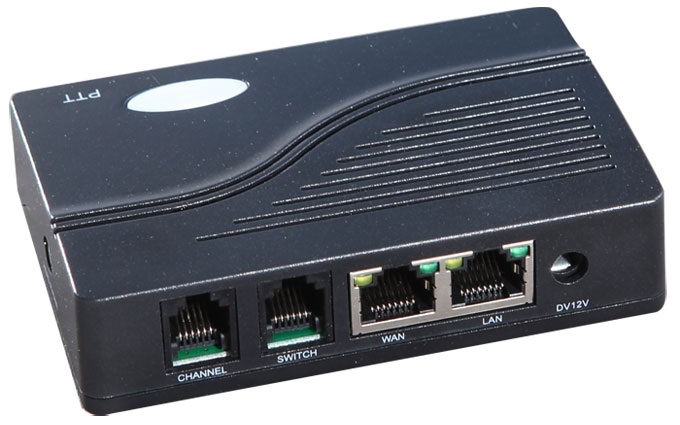
Voice over Internet Protocol (VoIP) uses the internet to make calls and send multimedia files. Radio over Internet Protocol (ROIP) is a network technology that utilizes the internet to transmit radio communications. These two technologies use internet protocol standards in their performances, but they differ in the following five ways:
1. Mode of Functionality
Voice over IP allows you to make voice calls and video calls. You can send messages, images, and videos with VoIP. This technology has other features, such as call forwarding, voicemail, and caller ID. You need a VoIP number to make or take your phone calls. Some VoIP communication services include:
- Computer to computer
- Phone to phone
- Computer to phone
Radio over IP augments two-way radio communications. This technology is voice-only, meaning you can’t send videos or images when conveying your message. Radio over IP offers point-to-point, point-to-multipoint, and cross-band connections.
2. Push-to-Talk (PTT) Capability
Radio over IP has a push-to-talk (PTT) capability that allows users to push a button every time they want to talk. VoIP doesn’t come with a PTT; instead, users can communicate simultaneously without the push button. The PTT requires the use of unique code words to minimize the risk of two people talking at the same time. Users press and hold the button to talk and let go to listen to the other parties.
PTT can allow for radio communication when users are on the same frequency. With push-to-talk technology, teams can communicate instantly. PTT can have noise-canceling features to enable voices to be heard, even in harsh environments. Communication over large distances can be possible with PTT in radio over IP systems.
3. Applications
Voice over IP and radio over IP have different applications. VoIP can be useful for businesses that require video and voice communication, such as remote work, teleconferencing, and customer support. Radio over IP software is beneficial for services, such as healthcare, utilities, emergency operations, and law enforcement, that need to communicate throughout a large area.
Hotels and resorts can utilize ROIP to coordinate their teams. Delivery fleet vehicle operators and retail workers can use voice commands on the radio over IP to complete their tasks. US military units and security operations officers use radio over IP to protect convoys across different geographies.
4. Latency
VoIP networks can be affected by variable and constant delays. Radio systems can be configured to handle delays better than telephone systems. Radio signaling can be synchronized with audio signaling to manage delays. Cross-talk and echo can interfere with VoIP communications. Some radio-over-IP networks have digital signal processors (DSP) that process audio and filter out echo signals.
Packet loss can occur when data packets don’t reach the receiver. VoIP systems tend to have high data packet loss because of congestion and overload. Well-designed radio over IP systems can have minimal data packet loss. Sufficient bandwidth can help reduce lags or delays.
5. Interoperability
Radio over internet protocol systems can combine VHF, UHF, cellular telephone, and air-to-ground technologies into a single voice conversation. A radio-over-internet gateway can allow a network to access features, such as radio identification and location services. With interoperability features, it’s easy to choose a suitable radio manufacturer.
Incompatible radio systems can communicate easily sharing a common data connection. A VoIP system uses the cloud to operate. You can expand the network by adding more users and devices.
Get a Reliable ROIP Platform
ROIP comes with a push-to-talk feature that allows users to communicate effectively. With this software, businesses can communicate with clients using telephones, and mobile devices. Radio over IP differs from VoIP due to its interoperability, application, and latency. Contact an internet communications software service to learn more about these two options.