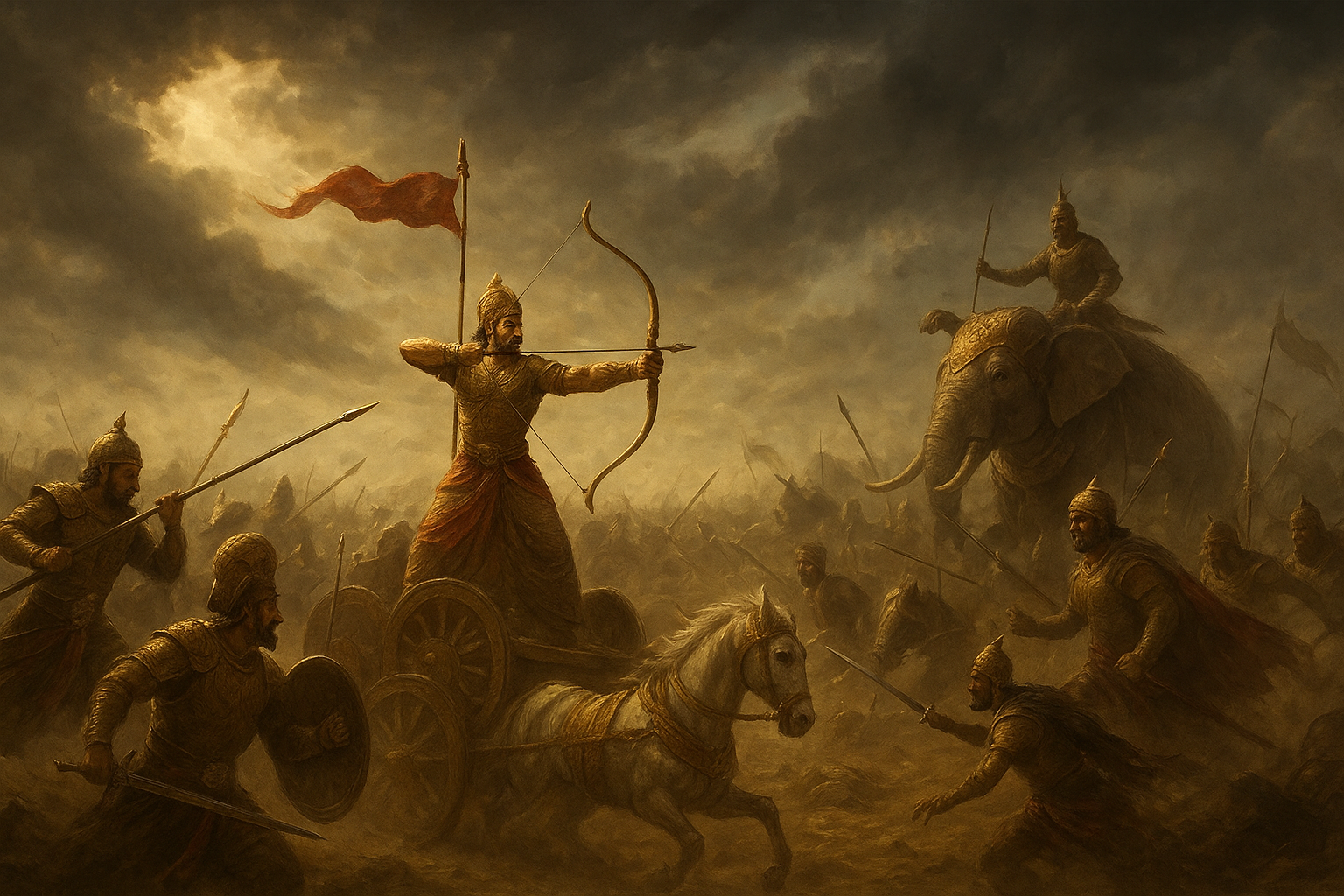
Kurukshetra War: The Epic Battle of Mahabharata
The Kurukshetra War is one of the most famous and important episodes in Indian mythology. The Mahabharata, an ancient Indian epic, tells the story of this fight between the Pandavas and the Kauravas on the battlefield of Kurukshetra. The conflict is not just a story of bravery and tactics; it is also a deep look at dharma (responsibility), morality, and what happens when people do things.
The Kurukshetra War’s background
The Kurukshetra War was the end of a long feud between the Pandavas and Kauravas, who were two branches of the Kuru dynasty. Yudhishthira headed the Pandavas, who were good and moral, while Duryodhana led the Kauravas, who were ambitious and unyielding. The fight was over who had the right to the throne of Hastinapura.
The cousins’ disagreements grew so bad that they had to go to war after many failed attempts at diplomacy and negotiation, including the well-known dice game that sent the Pandavas into exile. The Kurukshetra battlefield was the site of a huge struggle between armies, soldiers, and ideas.
Important People in the War
Some famous people were very important in the Kurukshetra War:
Arjuna, the best archer and warrior of the Pandavas, was taught by Lord Krishna.
Lord Krishna: He was Arjuna’s charioteer and advisor, and he taught him the everlasting wisdom of the Bhagavad Gita on the battlefield.
Bhima was very strong and helped defeat many Kaurava warriors.
Yudhishthira is the oldest Pandava and stands for dharma and fairness.
Duryodhana: The oldest Kaurava, who is driven by pride and ambition.
Karna was a close companion of Duryodhana and a great warrior who was the best archer in the world.
Bhishma, Drona, Shakuni, Abhimanyu, and many others were also important people who made the fight more intense and complicated.
Length and Size of the War
The Kurukshetra War lasted for 18 days, and each day there were fierce fights, acts of bravery, and great losses. The Mahabharata says that millions of troops, elephants, horses, and chariots took part, making it one of the biggest wars ever written about.
The war’s size also stood for the fight between good and evil, showing what happens when you don’t follow dharma (righteousness) and how important it is to do so.
Important Battles and Changes
Bhishma’s Leadership: Bhishma, the grandfather of both the Pandavas and the Kauravas, led the Kaurava army with unequalled skill. The Pandavas had a really hard time since he was so strong.
Abhimanyu’s bravery: On the 13th day, Arjuna’s son Abhimanyu entered the Chakravyuha formation and fought heroically, showing amazing bravery before unfortunately dying.
Bhishma’s Fall: On the 10th day, the Pandavas’ plot to use Shikhandi to defeat Bhishma finally worked.
The last fight between Karna and Arjuna on the 17th day showed off a lot of skill, bravery, and planning. Arjuna won, which changed the trajectory of the war.
Duryodhana’s Defeat: On the 18th day, Bhima hit Duryodhana’s thigh so hard that it killed him, ending the war and giving the Pandavas the win.
What we may learn from the Kurukshetra War
The Kurukshetra War is more than just a story of fights. It teaches important moral and philosophical lessons:
Dharma and Duty: Every fighter had a duty, and it was important to do it, even when it was hard to do the right thing.
The Consequences of Greed: Duryodhana’s quest for power killed his whole family.
The Importance of Wisdom: Lord Krishna’s advice shows how important it is to be wise and make good choices.
Bravery and Sacrifice: Many warriors showed great bravery and gave up their lives for their beliefs and loved ones.
The war also acts as a metaphor for the moral conflicts that everyone encounters.
Cultural and Historical Importance
The Kurukshetra War is an important part of Indian history and culture. Kurukshetra, which is now in Haryana, is a holy spot since it is where the fight happened and Lord Krishna spake about the Bhagavad Gita. Many books, plays, movies, and TV shows have been inspired by the epic.
Historians and historians frequently discuss the historical validity of the conflict, questioning whether it is grounded in reality or is entirely mythological; however, its teachings in ethics, strategy, and leadership endure through time.
Contemporary Interpretations
The Kurukshetra War still has an effect on current books, movies, and philosophy:
Movies: Kurukshetra (2019) and other movies bring the historic conflict to life for people today.
Books and plays: A lot of authors and playwrights have changed the story to look into human psychology and dharma.
Lessons in Leadership: Strategists and leaders often look to the war for lessons on how to make decisions, use resources, and fight on the battlefield.
The story of the conflict also speaks to people today as a metaphor for personal, moral, and social struggles.
Questions that are often asked (FAQ)
Q1: When did the war in Kurukshetra happen?
A1: The actual date in history is not known. People think that happened a long time ago, like thousands of years ago, according to the Mahabharata.
Q2: How long did the War of Kurukshetra last?
A2: The conflict lasted 18 days, and each day there were big battles and a lot of deaths.
Q3: Who were the principal fighters in the Kurukshetra War?
A3: Important people were Arjuna, Bhima, Yudhishthira, Duryodhana, Karna, Bhishma, Drona, Abhimanyu, and Lord Krishna, who drove Arjuna’s chariot.
Q4: What does the Kurukshetra War mean?
A4: The conflict stands for the fight between dharma (righteousness) and adharma (unrighteousness) and teaches us about morals, ethics, duty, and leadership.
Q5: What happened to the Pandavas after the battle?
A5: The Pandavas ruled Hastinapura for a long time, following their dharma. Later, they gave up the kingdom and set off on their last trek to the Himalayas.
Q6: What makes Kurukshetra a holy place?
A6: People hold Kurukshetra in high regard since it was the scene of the legendary war and where Lord Krishna gave the Bhagavad Gita to Arjuna.
Final Thoughts
The Kurukshetra War is a story that will last forever. It is a story about combat and strategy, but it is also a spiritual and philosophical guidance. The conflict continues to inspire generations with its lessons about duty, morality, bravery, and wisdom. Today, Kurukshetra is still a symbol of truth and wrong, valour, and the never-ending fight between good and evil.