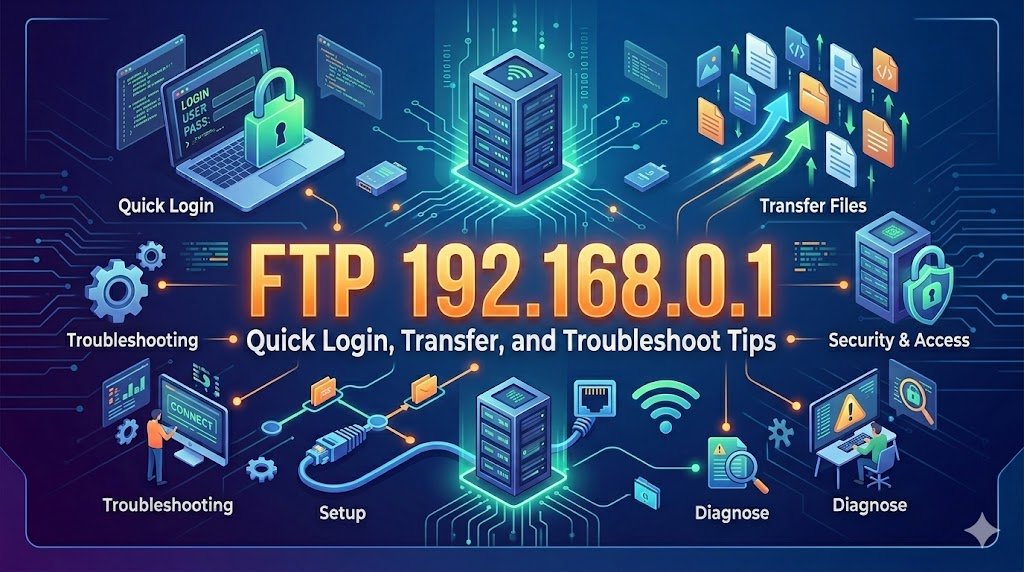
FTP (File Transfer Protocol) is a standard method for transferring files between computers or network devices. FTP 192.168.0.1 is commonly used in home and office networks to access routers, servers, or NAS devices. Understanding login procedures, file transfer methods, and troubleshooting can help ensure smooth operation.
This guide covers step-by-step instructions for logging into FTP 192.168.0.1, transferring files securely, and fixing common FTP issues.
Table of Contents
ToggleWhat Is FTP 192.168.0.1?
The IP 192.168.0.1 is a private IPv4 address typically used for routers or local servers. When combined with FTP, it allows secure file management within a local network.
Key Facts:
-
Private IP, not accessible from the public internet without port forwarding
-
Used for internal LAN file transfers
-
Requires a valid username and password for access
How to Login to FTP 192.168.0.1
Step 1: Connect to the Same Network
Ensure your device is connected to the same LAN as the FTP server at 192.168.0.1.
Step 2: Use an FTP Client
Use software like FileZilla, WinSCP, or Cyberduck:
-
Host:
192.168.0.1 -
Port:
21(default FTP port) -
Username and password: As configured on your device
Step 3: Test the Connection
Most clients have a Quickconnect feature. If successful, you’ll see the file directory of the FTP server.
File Transfer Tips
-
Upload Files
-
Drag and drop files from your local system into the FTP server directory
-
Download Files
-
Select files from the server and save them to your computer
-
Use Secure FTP
-
If possible, use FTPS or SFTP to encrypt file transfers
-
Organize Directories
-
Maintain a structured folder system on the server for easier access
Common FTP Issues and Fixes
-
Cannot Connect to FTP 192.168.0.1
-
Check if the FTP server is running
-
Ensure correct username/password
-
Confirm firewall allows FTP traffic
-
Slow File Transfers
-
Reduce simultaneous connections in your FTP client
-
Check LAN speed and router bandwidth
-
Permission Denied
-
Ensure your user account has proper read/write permissions
-
Verify server directory access
-
Timeout Errors
-
Increase timeout settings in your FTP client
-
Ensure network connection is stable
-
Port Blocked
-
Confirm router or firewall is not blocking port 21 or configured custom FTP port
Security Tips for FTP Access
-
Change default credentials immediately
-
Use SFTP or FTPS for encryption
-
Limit FTP access to trusted LAN devices only
-
Keep server firmware and software updated
-
Monitor logs for unauthorized access attempts
Benefits of Using FTP on 192.168.0.1
-
Centralized file storage within LAN
-
Quick access to server files
-
Easier backup and retrieval of data
-
Secure file management when using SFTP or FTPS
FAQs About FTP 192.168.0.1
Can I access FTP 192.168.0.1 from the internet?
Only if port forwarding or VPN is configured; otherwise, it’s limited to LAN.
Why can’t I login to FTP 192.168.0.1?
Incorrect credentials, inactive FTP server, firewall blocks, or port issues are common causes.
Is it safe to use FTP 192.168.0.1?
Plain FTP is not encrypted. For secure transfers, use FTPS or SFTP.
What is the default FTP port?
Port 21 is standard for FTP, but some servers may use custom ports.
How do I reset FTP credentials?
Access the router or server admin panel and update the username/password under FTP settings.
Conclusion
Using FTP 192.168.0.1 allows efficient file transfers within a local network. Proper login procedures, secure transfer methods, and troubleshooting practices ensure reliable and safe FTP access for routers, servers, and NAS devices.
Disclaimer
This guide is for educational purposes. FTP configurations, ports, and security settings may vary depending on devices and network setup. Always follow security best practices when using FTP.