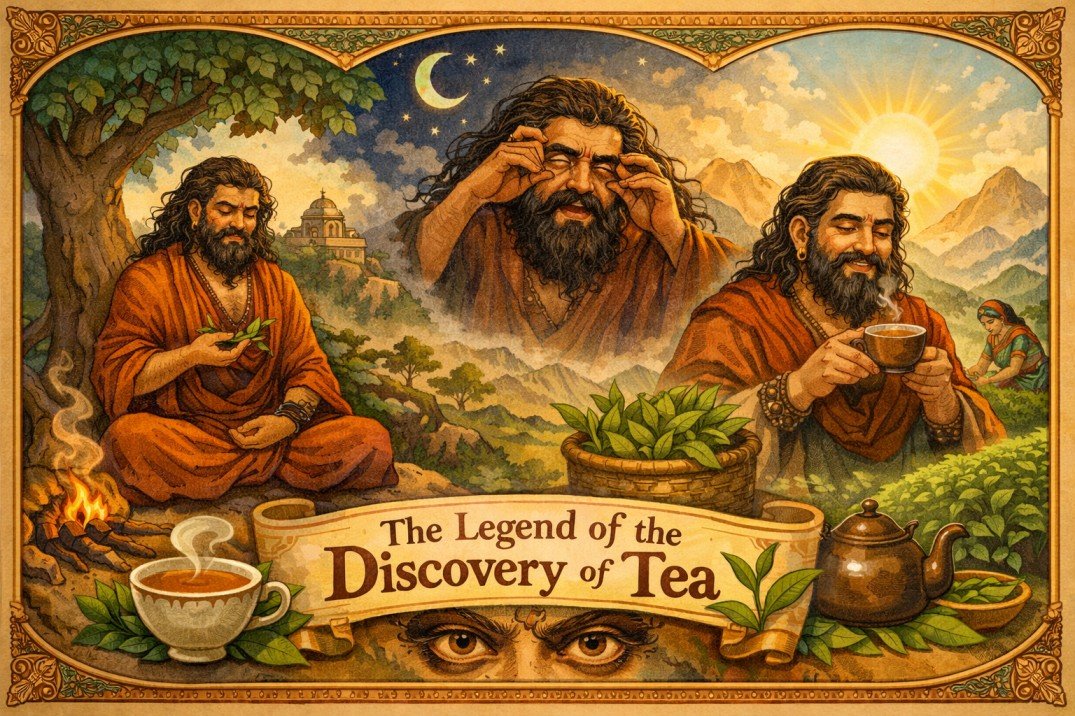
What is the Indian legend about discovery of tea?
What is the Indian legend about discovery of tea? This question leads us into a rich and fascinating story rooted in Indian mythology, spirituality, and ancient traditions. Unlike modern scientific discoveries, the origin of tea is surrounded by legends that reflect cultural beliefs and values. Among these, the Indian legend—centered around the Buddhist monk Bodhidharma—is one of the most popular and meaningful narratives explaining how tea was discovered.
The Origin of Tea in Myth and Tradition
Tea is one of the most widely consumed beverages in the world today. In India especially, tea (or chai) is not just a drink—it is an emotion, a daily ritual, and a symbol of hospitality. But long before tea became a household staple, its origin was explained through stories passed down from generation to generation.
There is no single confirmed historical account of how tea was discovered. Instead, different cultures developed their own legends. The Indian legend stands out because it connects tea with meditation, discipline, and spiritual awakening, rather than just accidental discovery.
The Indian Legend: Story of Bodhidharma

The Indian legend of the discovery of tea revolves around Bodhidharma, a revered Buddhist monk believed to have lived around the 5th or 6th century. He is credited with spreading Buddhism to China and is known as the founder of Zen Buddhism.
According to the legend, Bodhidharma undertook a challenging spiritual journey. He vowed to meditate continuously for nine years without falling asleep. This intense practice was meant to help him achieve enlightenment and gain complete control over his mind.
However, during this long period of meditation, Bodhidharma became exhausted and eventually fell asleep. When he woke up, he felt deeply ashamed for breaking his vow. Determined to ensure that he would never fall asleep again, he took a drastic and symbolic step—he cut off his eyelids.
He then threw his eyelids onto the ground. After some time, a plant began to grow from that very spot. This plant later became known as the tea plant. When its leaves were boiled in water, they created a refreshing drink that helped people stay awake and alert.
Thus, according to the Indian legend, tea was discovered as a result of Bodhidharma’s determination and sacrifice.
Meaning and Interpretation of the Legend
Although the story may seem extreme or even unrealistic, it carries deep symbolic meaning. The legend is not meant to be taken literally but rather understood as a reflection of spiritual values.
1. Symbol of Alertness
Tea is associated with staying awake and focused. In the legend, it helps Bodhidharma overcome sleep, making it a symbol of mental alertness.
2. Discipline and Dedication
Bodhidharma’s actions represent the importance of discipline and commitment. The story emphasizes that success and enlightenment require strong willpower.
3. Spiritual Awakening
In Buddhism, being “awake” is not just about avoiding sleep—it also means achieving awareness and enlightenment. Tea becomes a metaphor for clarity of mind.
4. Transformation Through Sacrifice
The idea that tea plants grew from Bodhidharma’s sacrifice suggests that something positive can emerge from hardship and determination.
Alternative Version of the Indian Legend

Some versions of the Indian legend are less dramatic and more practical.
In this version, Bodhidharma did not cut off his eyelids. Instead, he discovered tea accidentally while trying to stay awake during meditation. He either:
- Chewed tea leaves, or
- Brewed them in hot water
He noticed that these leaves had stimulating properties that helped him remain alert and focused for long periods.
This version aligns more closely with the actual effects of tea, as it contains caffeine, which helps reduce fatigue and improve concentration.
Comparison with the Chinese Legend
To better understand the Indian legend, it is useful to compare it with the Chinese story of tea discovery, which involves Shen Nong.

Chinese Legend Summary
According to Chinese mythology, Emperor Shen Nong was boiling water when tea leaves from a nearby tree accidentally fell into his pot. Curious, he tasted the infusion and found it refreshing and beneficial for health.
Key Differences Between the Two Legends
| Aspect | Indian Legend | Chinese Legend |
|---|---|---|
| Discovery Type | Intentional and spiritual | Accidental |
| Main Figure | Bodhidharma (monk) | Shen Nong (emperor) |
| Focus | Meditation and discipline | Health and experimentation |
| Message | Overcoming sleep and achieving focus | Discovering medicinal benefits |
The Indian legend is more philosophical, while the Chinese legend is more practical and scientific.
Tea as a Medicinal Drink in Early Times
Both legends highlight an important point: tea was initially valued for its medicinal properties.
In ancient times, tea was believed to:
- Improve digestion
- Increase alertness
- Reduce fatigue
- Refresh the body and mind
This explains why monks like Bodhidharma would use it during meditation.
Cultural Importance of Tea in India
Although tea became widely popular in India during the British colonial period, its legendary roots connect it to much older traditions.
1. Tea and Daily Life
Today, tea is an essential part of Indian culture. It is consumed:
- In the morning to start the day
- During work breaks
- While socializing with friends and family
2. Symbol of Hospitality
Offering tea to guests is a common practice in Indian households.
3. Connection with Energy and Refreshment
Just like in the legend, tea is still known for its ability to refresh and energize.
Historical Reality vs Myth
While the Indian legend is meaningful, historians provide a different explanation for the origin of tea:
- Tea likely originated in regions of China and Northeast India.
- It was first used as a medicinal herb before becoming a beverage.
- The large-scale cultivation of tea in India began during British rule in the 19th century.
Therefore, the legend should be understood as a cultural story rather than a factual account.
Why the Indian Legend Still Matters
Even in modern times, the Indian legend of tea discovery continues to hold significance.
1. It Teaches Values
The story emphasizes discipline, focus, and determination.
2. It Explains Tea’s Role
It highlights why tea is associated with alertness and energy.
3. It Preserves Cultural Heritage
Legends like this help keep ancient traditions alive.
Tea’s Journey from Ancient Legend to Modern Life
Tea has come a long way from its legendary origins:
- Ancient times: Used as a medicinal herb
- Medieval period: Consumed in monasteries and royal courts
- Colonial era: Commercial cultivation in India
- Modern era: One of the most popular beverages worldwide
India is now one of the largest producers and consumers of tea globally.
Conclusion
What is the Indian legend about discovery of tea? It is a powerful and symbolic story about the monk Bodhidharma, whose determination to stay awake during meditation led to the discovery of tea. Whether through the dramatic tale of his eyelids or the simpler version of chewing tea leaves, the legend emphasizes tea’s role in promoting alertness and focus.
While not historically accurate, this legend beautifully captures the essence of tea as more than just a drink. It represents discipline, awareness, and the ability to transform challenges into something beneficial.
Even today, every cup of tea carries a connection to this ancient story—a reminder that behind every simple habit lies a rich and meaningful history.
Frequently Asked Questions (FAQ)
Who was Bodhidharma?
Bodhidharma was an ancient Indian Buddhist monk who is believed to have founded Zen Buddhism. He is known for his strict meditation practices and strong discipline.
Is the Indian legend of tea discovery true?
No, the legend is not historically proven. It is a cultural and symbolic story meant to explain the energizing properties of tea and its connection with meditation and alertness.
Why is tea associated with staying awake?
Tea contains caffeine, which is a natural stimulant. In the legend, tea helps Bodhidharma stay awake during meditation, symbolizing alertness and focus.
Are there different versions of the Indian legend?
Yes, some versions say Bodhidharma cut off his eyelids, while others suggest he simply chewed tea leaves or brewed them to stay awake. Both versions highlight tea’s ability to reduce fatigue.
How is the Indian legend different from the Chinese legend of tea?
The Indian legend focuses on discipline and meditation, while the Chinese legend involves Shen Nong discovering tea accidentally when leaves fell into boiling water.
What does the Indian legend symbolize?
The legend symbolizes discipline, mental alertness, spiritual awakening, and the idea that positive things can come from sacrifice and determination.
When did tea actually originate?
Historically, tea is believed to have originated in regions of China and Northeast India thousands of years ago, initially used as a medicinal herb.
Why is tea so popular in India today?
Tea is popular in India because of its refreshing taste, energizing effect, and its role in social and cultural traditions like serving chai to guests.
What lesson can we learn from the Indian legend of tea?
The legend teaches us the importance of discipline, focus, and perseverance. It shows how determination can lead to meaningful discoveries and benefits.